Hawaii Shark Safety: How to Avoid a Hawaii Shark Attack

A quick note: we’ve included a few affiliate links below. Booking through them costs you nothing extra and sends a small commission our way, which helps us keep writing free Hawaii guides. We only ever link to things we’d recommend to a friend. Mahalo! Read about our affiliate policies here.
One of the most frequent questions we get is about Hawaii shark attacks. I get it: you want to keep your family safe, your life partner alive, or you just have a nagging feeling that you should look into Hawaii shark attacks before your trip.
I am a perpetual optimist, so a shark attack never crosses my mind when swimming in Hawaii. But sharks are on the brain for others (*cough* my wife, Erica).
Shark attacks can and do happen. Hawaii tracks shark attacks, and the odds are still in your favor that you will not be targeted. Falling coconuts are far more deadly than sharks. If you’re still worried, you can vastly minimize your risk of an attack with these Hawaii shark attack safety tips.
FYI, sharks, in Hawaiian, are called mano.
Free Download!
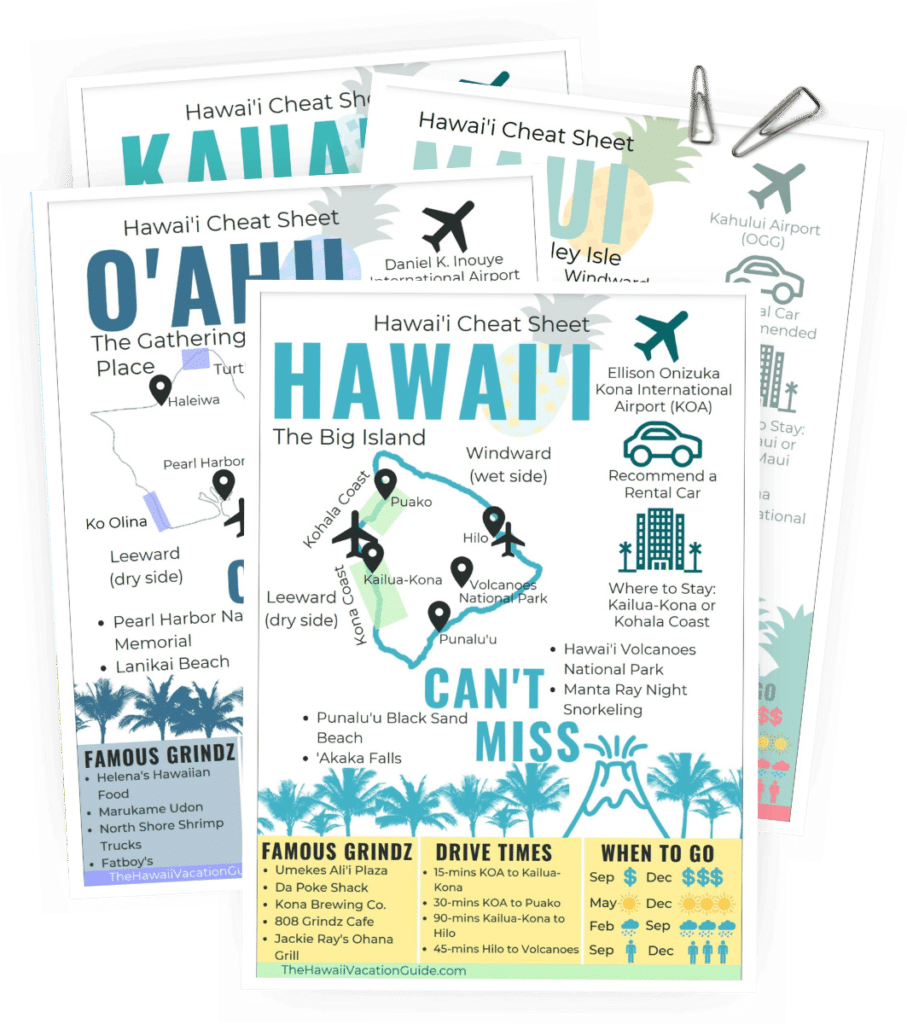
Hawaiian Island Cheat Sheets
Sign up & we’ll send you our island cheat sheets so you can get to know the islands like the back of your hand!
We’ll share 4 can’t-miss activities on each island, a map with the main sights in town, & famous local grindz (eats)!
When you’re ready to jump back into your Hawaii trip planning, we have some great resources to help you:
Decide Which Hawaiian Island to Visit
While October may be out of the running for you, we still think it’s one of the best times to visit Hawaii.
No matter when or where you go, you’ll want to grab reef-friendly sunscreen, and check out our packing list for more essentials.
How to Prevent a Hawaii Shark Attack
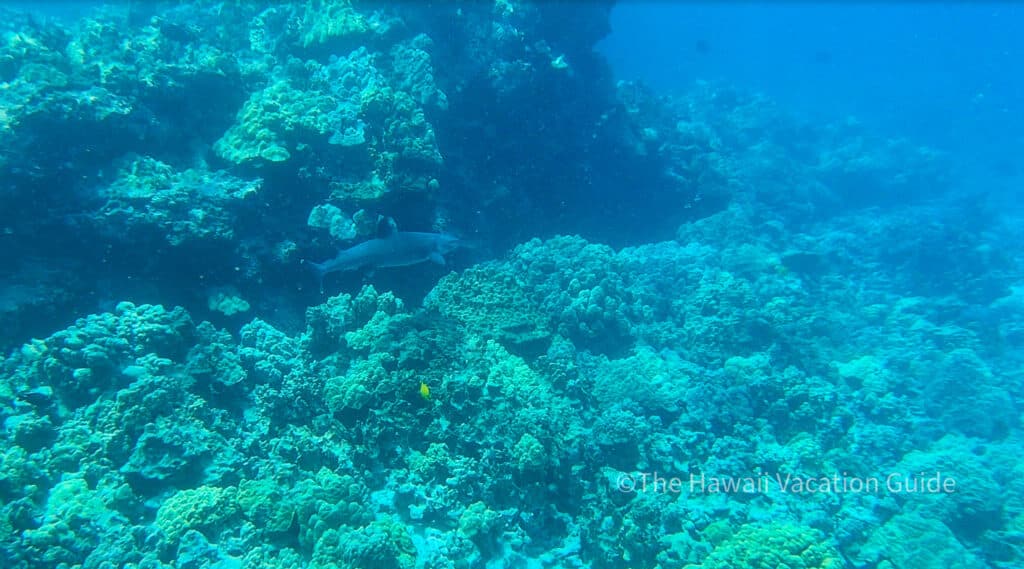
As you read up on sharks in the other seven tabs open in your browser, you may feel intimidated by their far-reaching senses, but there is much you can do to mitigate your risk of encountering a shark in Hawaii.
The first thing that can help settle your nerves is to know what sharks are looking for (spoiler: it’s not humans). Sharks are pretty indiscriminate when picking a sea-dwelling snack – tiger sharks have even gotten the nickname “the garbage can of the sea” – and they’re not looking to work too hard.
They focus their efforts on sick and injured sea life, so you hear about not going into the water if you’re bleeding and not thrashing in the water – that’s when you start to look like injured prey.
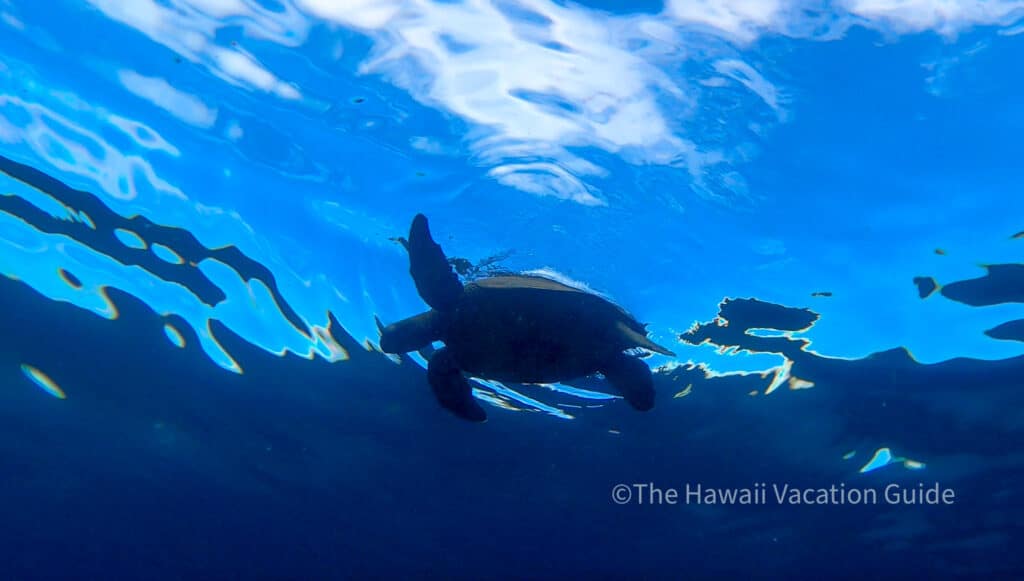
It’s important to remember that most attacks are non-fatal bites that may be due to a shark trying to determine whether or not something is food. Most people survive shark encounters, bites, and attacks, so it’s probably safe to assume we’re not a preferred food source, even for these unfussy eaters.
We have ten common and practical tips for staying safe in the Pacific Ocean so you can avoid a Hawaii shark attack. If you want to add an 8th tab to your shark collection, Hawaii’s DLNR has a similar list here.
Hawaii Shark Attack Safety Tips
- Don’t go off alone. Swim and snorkel with other people.
- Don’t enter the water if you’re bleeding — even a little bit. They can detect the smallest amount of blood and will come to investigate.
- Avoid murky water, harbor entrances, stream mouths, channels, or steep dropoffs. Sharks like to hang out in these places.
- Don’t wear high-contrast clothing or jewelry. This will get their attention and draw them in.
- Don’t splash excessively. The splashing could attract sharks.
- Don’t go in the water if a shark has been spotted (obviously).
- If fish or turtles begin acting erratically, it is best to leave the water. They might feel the presence of a shark nearby.
- Be cautious if dolphins are present — some larger sharks view them as food.
- Don’t swim near people who are fishing. Why swim near shark bait?
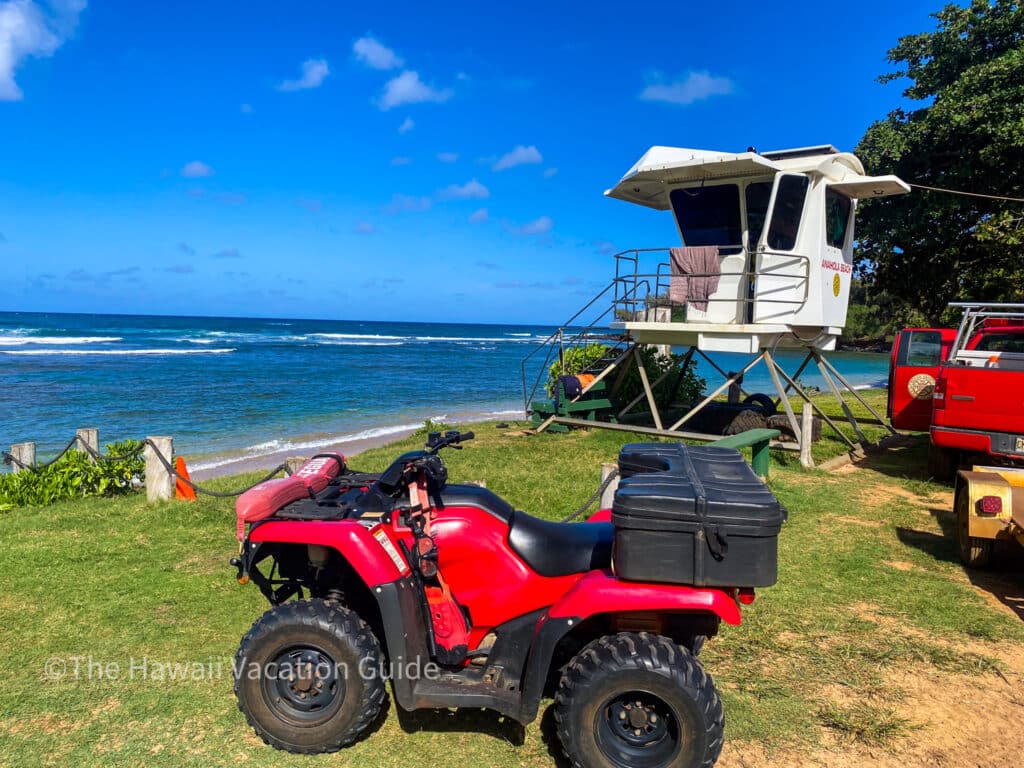
- When in doubt, stick to beaches with lifeguards and follow their instructions.
With these tips in mind, check out our favorite snorkel spots around the islands:
The 11 Best Snorkeling Spots on Maui (+7 crucial tips)
5 Best Big Island Snorkeling Spots (plus how to swim with manta rays)
5 Best Snorkeling Spots on Oahu
Don’t Miss the 5 Best Snorkeling Spots on Kauai
What are the Chances of a Hawaii Shark Attack?
We at The Hawaii Vacation Guide love data and rabbit holes. My bias toward optimism surrounding Hawaii shark attacks is backed up by research. I can remain blissfully unconcerned about sharks, and you can rest assured knowing that taking precautions coupled with statistics in your favor will keep you safer in Hawaii’s waters.
I must include an obligatory disclaimer that the ocean is not an inherently safe place to explore. Humans are out of their element, and the data shows that sharks are not the biggest threat to our safety in the ocean. That aside, you came here for the figures on sharks, so let’s dig in.
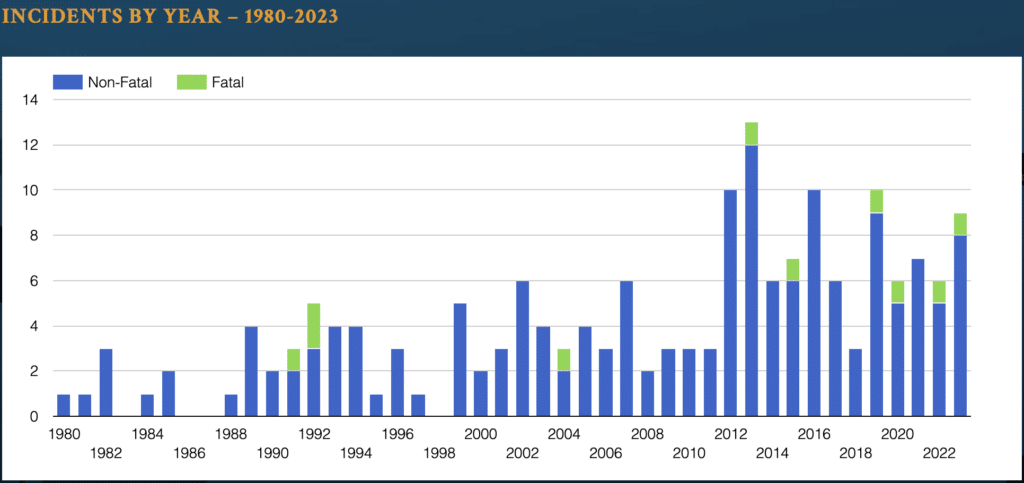
Hawaii shark attacks are exceedingly rare, especially considering how many people enter the water yearly. Out of Hawaii’s 9.6 million visitors and 1.5 million residents, there were eight shark attacks recorded in 2023; one was fatal, and two resulted in no injuries (those sharks bit boards, not people). The chance of a shark attack is less than 1 in a million, and the possibility of a fatal attack is around 1 in 3.7 million.
Check out the data for the last eight years compared to the number of visitors to Hawaii.
| Hawaii Shark Attacks 2016 – 2023 | ||||
| Year | Total Attacks | Fatal Attacks | Attacks with No Injury | Number of Visitors to Hawaii |
| 2023 | 8 | 1 | 2 | 9.6 million |
| 2022 | 8 | 1 | 1 | 9.2 million |
| 2021 | 8 | 0 | 1 | 6.8 million |
| 2020 | 6 | 1 | 2 | 2.7 million |
| 2019 | 14 | 1 | 3 | 10.4 million |
| 2018 | 3 | 0 | 0 | 9.9 million |
| 2017 | 5 | 0 | 1 | 9.4 million |
| 2016 | 10 | 0 | 2 | 8.9 million |
If you like my table, you’ll love all the graphs from Hawaii’s DLNR. We include a few below, but here’s an excellent summary of what they have found:
- Since 1980, there have been an average of 4 unprovoked attacks per year, though the average has increased to 8 since 2012.
- The majority of attacks since 1980 have occurred in October. There is no close second.
- The activity seeing the most attacks is surfing. Swimming is second, but it’s not close.
Hawaii’s Sharktober
While shark attacks do happen year-round, they significantly increase in October, hence the term Sharktober. Sharktober typically runs from September to the end of November, and most Hawaii shark attacks occur from October through December.
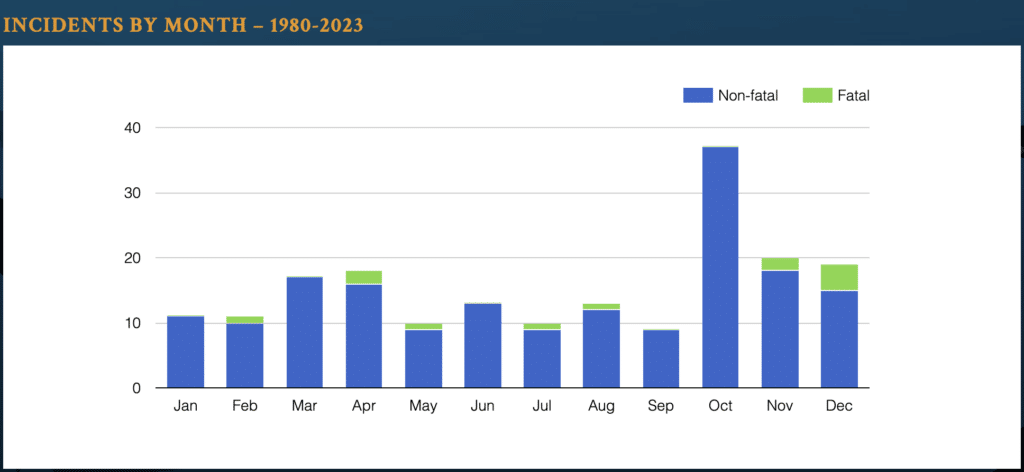
Sharktober is an interesting occurrence and not just a Hawaii thing.
October is peak tiger shark pupping season. The nursing period for tiger sharks runs from September to November. About 25 percent of mature female tiger sharks in the Northwestern Hawaiian Islands migrate to the main Hawaiian Islands in autumn. Great White sharks behave similarly around the Farallon Islands offshore of San Francisco.
A 2015 University of Hawaii study found that “the energetic cost of nourishing their pups outpaces the replacement of energy via feeding.” In short, tiger shark moms are hungry. Accidental attacks are more likely to occur with postpartum, hungry sharks.
To add salt to the wound, a separate UH study found that Hawaii tiger sharks travel to Maui’s waters each winter for birthing. Scientists don’t know why but believe it is due to shallower water. October has the highest number of shark attacks in Hawaii. And, Maui has the most recorded shark attacks in Hawaii.
As with slap bracelets in middle school, we were late to catch on. Ancient Hawaiians noticed the trend in shark attacks. A traditional Hawaiian proverb states, “Pua ka wiliwili, nanahu ka manō.” This translates to, “When the wiliwili tree blooms, the shark bites.”
Wiliwili trees bloom with a bright orange blossom from late summer into early fall, directly coinciding with shark pupping season.
Free Download!
Hawaiian Island Cheat Sheets
Sign up & we’ll send you our island cheat sheets so you can get to know the islands like the back of your hand!
We’ll share 4 can’t-miss activities on each island, a map with the main sights in town, & famous local grindz (eats)!
Hawaii Shark Attacks: Facts and Figures
Time for some more interesting tidbits about sharks around Hawaii:
- Tripping, slipping, and falling have a higher fatality rate than shark attacks.
- About 40 species of sharks live around Hawaii’s waters, but only about eight are encountered more commonly.
- Of the 40 species, they vary in size from 8 inches to 50 feet or more.
- Determining the species of sharks most responsible for attacks can be challenging, as many inshore species are difficult to differentiate, especially in frightening circumstances. Tiger sharks are often identified because of their distinctive appearance, not necessarily because they’re responsible for more attacks.
- Sharks have inhabited Earth’s oceans for an estimated 400 million years.
- Despite their reputation, humans are actually more of a danger to sharks than they are to us, with some species of sharks approaching endangerment.
- Sharks are vital to the health of ocean ecosystems.
- Keep exploring fun facts about sharks here.
Hawaii isn’t just about ocean activities. Check out the best of each island:
Best 40 Things to Do on Oahu, Hawaii (the list + map you need)
35 Best Things to Do on Kauai (Must Do + See)
31 of the BEST Things To Do On Maui (Updated)
29 Incredible Things to Do on the Big Island (map + video included)
Notable Hawaii Shark Attacks
Now that we’ve established the likelihood of being attacked by a shark in Hawaii, we can look at the stories that have instilled a sense of foreboding whenever sharks are mentioned.
As with everything in the world, the more severe and rare an occurrence is, the more likely it is to make headlines. There’s a reason we don’t hear about every tornado, wildfire, or hurricane, but sharks in paradise? That’s something the media loves to sink its teeth into…
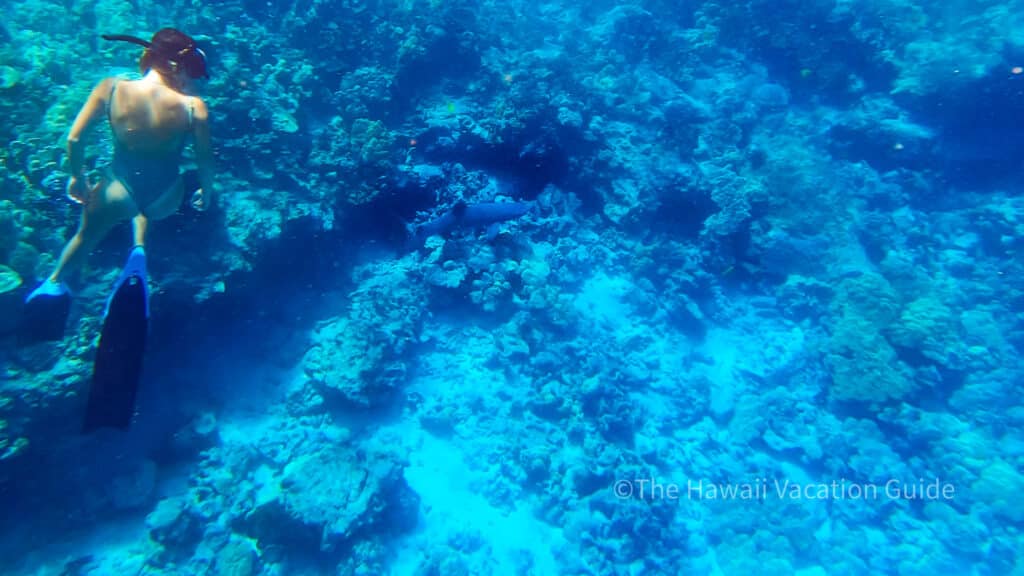
Hawaii shark attacks are often more accurately described as shark bites or encounters. While these situations are rare, to begin with, encounters resulting in major injuries or fatalities capture our attention and reinforce our fears.
Hawaii News Now covered the June 2024 death of Tamayo Perry and gave a brief overview of every fatal Hawaii shark attack since 2004. While every fatal encounter shocks the nation, hearing that a world-renowned surfer and lifeguard has been a victim can come as more of a surprise.
That fact made the death of Robin Warren in 2020 just as frightening. Warren was also a surfer, and he was attacked at Honolua Bay on the last day of the Maui Pro.
While all shark attacks are frightening, most don’t have such a heavy ending. On the Big Island in 2022, a man fought a tiger shark off with a dive knife and lived to tell the tale.
You can find a complete log of Hawaii shark attack incidents here.
We hope you feel more confident that sharks are unlikely to pose a serious risk to you on your vacation!