How to Visit Hawaii Volcanoes National Park (2026 Guide)
A quick note: we’ve included a few affiliate links below. Booking through them costs you nothing extra and sends a small commission our way, which helps us keep writing free Hawaii guides. We only ever link to things we’d recommend to a friend. Mahalo! Read about our affiliate policies here.
Standing on the edge of an active volcano isn’t something you can do in most national parks.
At Hawaiʻi Volcanoes National Park, you can walk over a hardened lava lake, step inside a massive lava tube, and peer into the crater of Kīlauea — one of the most active volcanoes on Earth.
But here’s what surprises most first-time visitors:
- The park is huge: home to two active volcanoes and the Kahuku Unit.
- The weather changes fast.
- And if you don’t plan your route, you can waste hours driving back and forth.
- Kīlauea isn’t always erupting. Check the live status here: USGS Kilauea Status
If you’re wondering how to visit Hawaii Volcanoes National Park without missing the highlights, this guide walks you through exactly what to do — whether you have just a few hours or a full day. We’ll cover the must-see stops, the perfect one-day itinerary, safety tips, and when it’s worth booking a guided volcano tour instead of going on your own.
By the end, you’ll know exactly how to experience one of the most unique landscapes in Hawaii — without feeling overwhelmed.
Quick tips on how to visit Hawaii Volcanoes National Park:
- Hawaii Volcanoes National Park Tours: Here is our shortlist of the best tours to fully experience the park
- Quick Tips for Visiting Hawaii’s National Parks
- FREE Big Island Travel Guide for the rest of your vacation!
- Are you heading to Maui? See our Guide to Visiting Haleakala National Park
Quick Planning Basics (Before You Go)
How to visit Hawaii Volcanoes National Park starts with these basics on the park.
While the park covers 554 square miles and starts from sea-level to rise to the top of Mauna Loa at 13,677 feet, the area you will visit is relatively small.
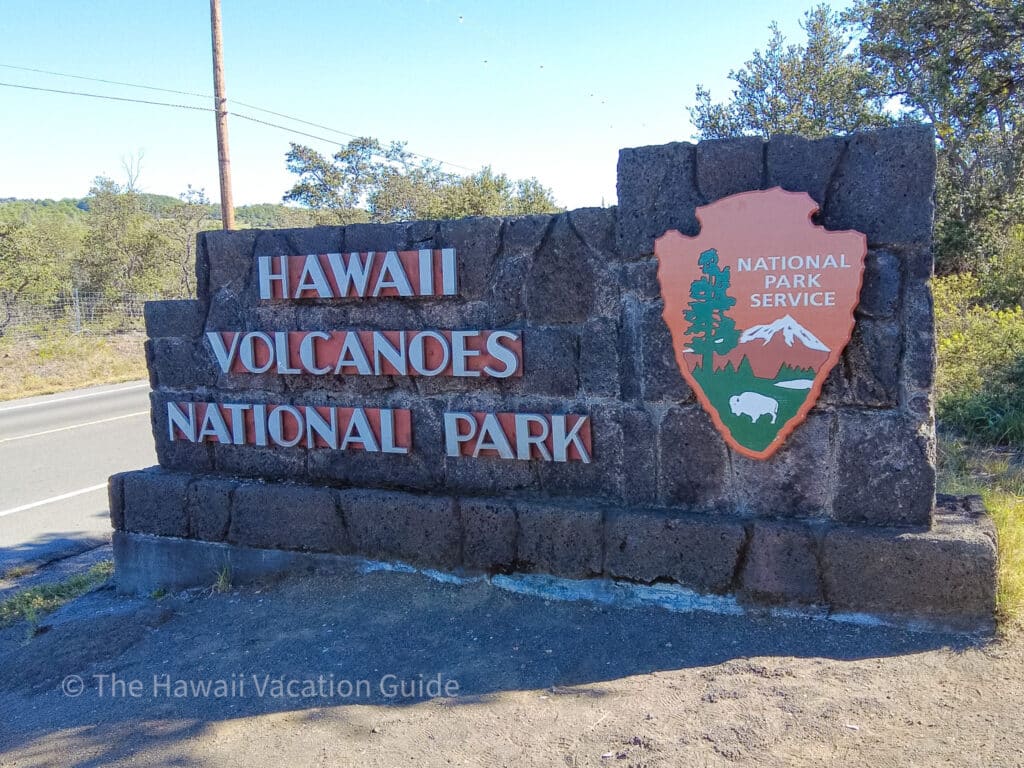
Visitors enter through the main gate near the village of Volcano. The popular area of the park is around Halemaumau Crater (home to the goddess Pele), the active caldera of Kilauea.
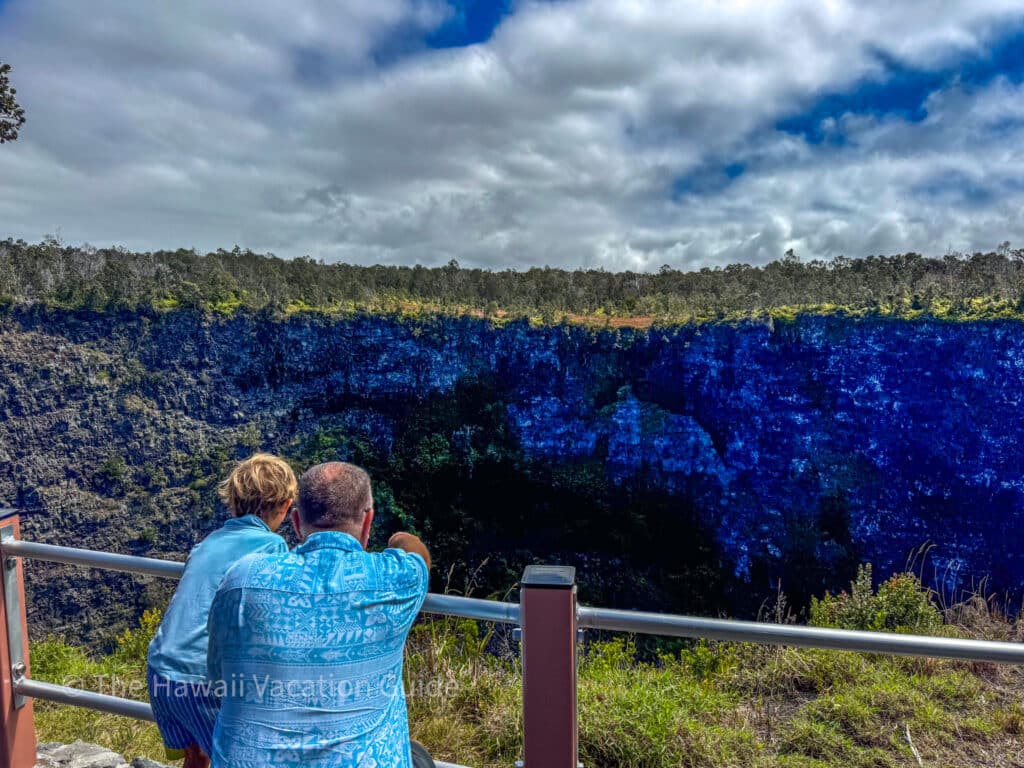
A road takes you around the crater rim to view numerous sites. Visitors also enjoy driving down Chain of Craters Road. The road starts at the caldera and goes to sea level, following numerous craters from past eruptions along fissures. This road has been destroyed by lava flows numerous times over the past century.
Mauna Loa volcano is rarely visited. The Mauna Loa hike is long, hot, and treacherous. Mauna Loa rarely erupts; it last erupted in 1984 and 2022. I recommend visiting Uekahuna Overlook for a good view of Mauna Loa.
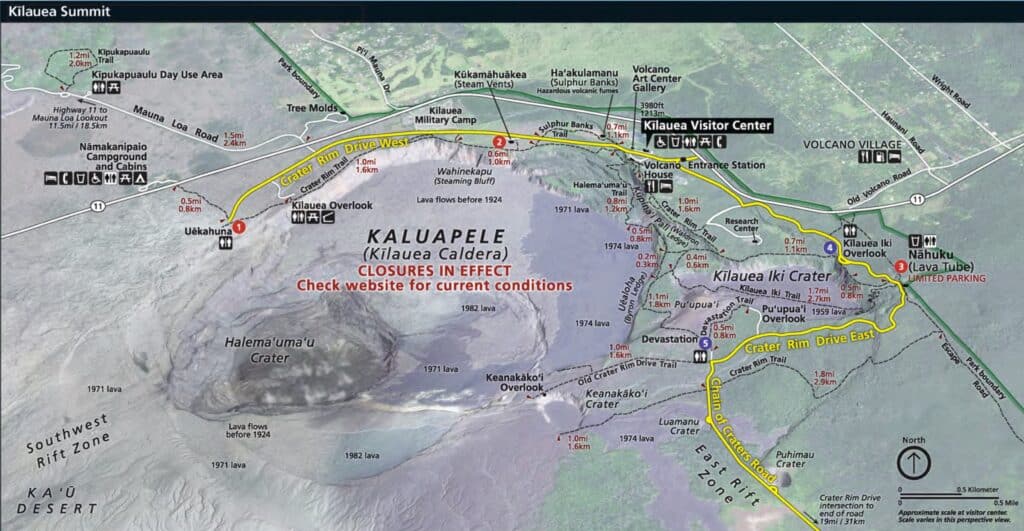
Construction Update: The Kīlauea Visitor Center (KVC) closed for extensive renovation in March 2025. This is part of a park beautification program. The park is updating the entrance driveway, the visitor center, and removing outdated buildings. The park is still fully open during these 2 years of construction.
The Welcome Center is now open at Kilauea Military Camp while the Kīlauea Visitor Center undergoes renovations. Park rangers and the Hawaiʻi Pacific Parks Association park store are available from 9 a.m. to 4:45 p.m. daily. The Kilauea Military Camp is about a mile into the park, after the main ticket entrance.
Hawaii Volcanoes National Park is on Which Island?
Hawaii Volcanoes National Park is located on the Island of Hawaii (Big Island). The main entrance to the park is located near the village of Volcano.
Click here for Google Map directions to the entrance of Hawaii Volcanoes National Park.
The park is located near the southern point of the Big Island. The closest airport is Hilo International Airport, and the closest large town is Hilo.
Here are driving times from popular locations on the Big Island to Volcanoes National Park’s main entrance.
- From Kailua-Kona: 2 hours and 10 minutes
- From Kona International Airport (KOA): 2 hours and 5 minutes
- From Waikoloa Resorts: 2 hours
- From Hilo: 40 minutes
Park Entrance Fees & Hours
- The park is open 24-hours
- All visitors must have an entrance pass
- Passes are $30 per vehicle (includes all members of the private vehicle)
- Get a discounted pass or a free pass if you qualify. Free passes are available for military veterans and their families, as well as for 4th graders. Seniors receive a discounted pass.
- Consider purchasing a Hawai’i Tri-Park Annual Pass for $55. The pass admits the passholder and 3 additional adults to Haleakalā National Park, Hawaiʻi Volcanoes National Park, and Puʻuhonua ʻO Hōnaunau National Historical Park.
- The park does not accept cash.
- Passes can be purchased online here or at the main entrance gate.
- Pro tip: I recommend purchasing early if you’re visiting during the busy season, as you can find a wait at the entrance.
Best Time to Visit Hawaii Volcanoes National Park
We have had the best experience when we arrive at the park early in the morning, around 8 AM. Hence, it is convenient to stay nearby, such as at Volcano House in Volcano or near Hilo.
You can beat the rush of visitors who arrive from Kona around 10 am if you arrive early.
The park is open 24 hours, so you can arrive at sunrise or visit at dusk to see the lava glow.
Most visitors arrive at 10 am and leave by 4 pm for dinner and the drive back to Kona or Hilo.
The park is busiest during the holidays and the summer.
The best time to view the lava depends on the type of eruption. Dusk and nighttime are best if it is a slow eruption, as they create a glow in the caldera. If there are lava fountains, dramatic views are available at any time of day.
The weather can change quickly! The summit area is at 4,091 feet in elevation, so it can get cold by Hawaii standards. We visited in the summer, with temperatures reaching 55 degrees in the evening. We recommend bringing layers when you visit the park.
At higher elevations and near the windward side of the island, mist and rain are possible year-round.
Temperature varies by elevation. At the summit of the volcano, temperatures may be 12 to 15 degrees cooler than at sea level. The coastal plain at the end of Chain of Craters Road is often hot, dry, and windy with the possibility of passing showers.
Pro Tip: Check the current weather forecast before you visit Hawaii Volcanoes National Park. Current weather at the park.
FAQs for First-Time Visitors to Hawaii Volcanoes National Park
- Can you see lava right now? It depends! See our quick links below to check on the eruption status.
- Where is the best place to view the eruption? The optimal viewing location varies with the eruption. See here for tips on the best places to view eruptions.
- What are the volcanoes in the Park? Kilauea and Mauna Loa are the two volcanoes inside Hawaii Volcanoes National Park.
- Is it safe for kids? Yes! We love bringing our kids to the park. There are easy hikes and viewing locations that the kids love. See the park safety in the event of vog or a large eruption event.
- Can you visit at night? Yes! Park Rangers welcome visitors at night, as it is a great way to avoid the crowds during busy eruption-viewing times.
- Do you need reservations? No reservations are required for visiting the park at any time of day. A reservation is required only for visiting Maui’s Haleakala National Park for sunrise.
- How accessible is the park? Wheelchair access is available at the main buildings. Access along trails and viewpoints depends on the conditions. See here for details on accessibility. See our Guide to Hawaii Handicap Accessible Trip Planning for information on your Hawaii vacation.
Best Links for Visiting Hawaii Volcanoes National Park
Here are the official links on how to visit Hawaii Volcanoes National Park. We know from experience that it can be hard to find what you’re looking for on government websites.
- Official NPS website for Hawaii Volcanoes National Park
- Hawaii Volcanoes National Park Webcams
- Weather Forecast
- USGS Kilauea Eruption Status
How to Visit Hawaii Volcanoes National Park (Step-by-Step)
Erica and I have fallen into a routine when we visit the park, as we find this to be our favorite way to enjoy it. Watch our video below for a classic example of one of our day-trips from Kona to the park.
If you’re looking for a unique perspective and to find hidden gems, go out with a local guide!
I can’t imagine another National Park changing as often as Volcanoes. So, go out with a guide for the best and the latest. We share our full list of Hawaii Volcanoes National Park tours below.
Step 1: Start at the Visitor Center
Soon after you enter the main entrance, make your first stop at the Kilaeau Visitor Center. I like to stop here to ask Park Ranger questions and to understand the eruption status.
This is a great place to learn about the park’s history, Hawaiian culture, and its flora and fauna.
Grab a map, lay out your plan for the day, and hit the restrooms.
Step 2: Explore the Thurston Lava Tube
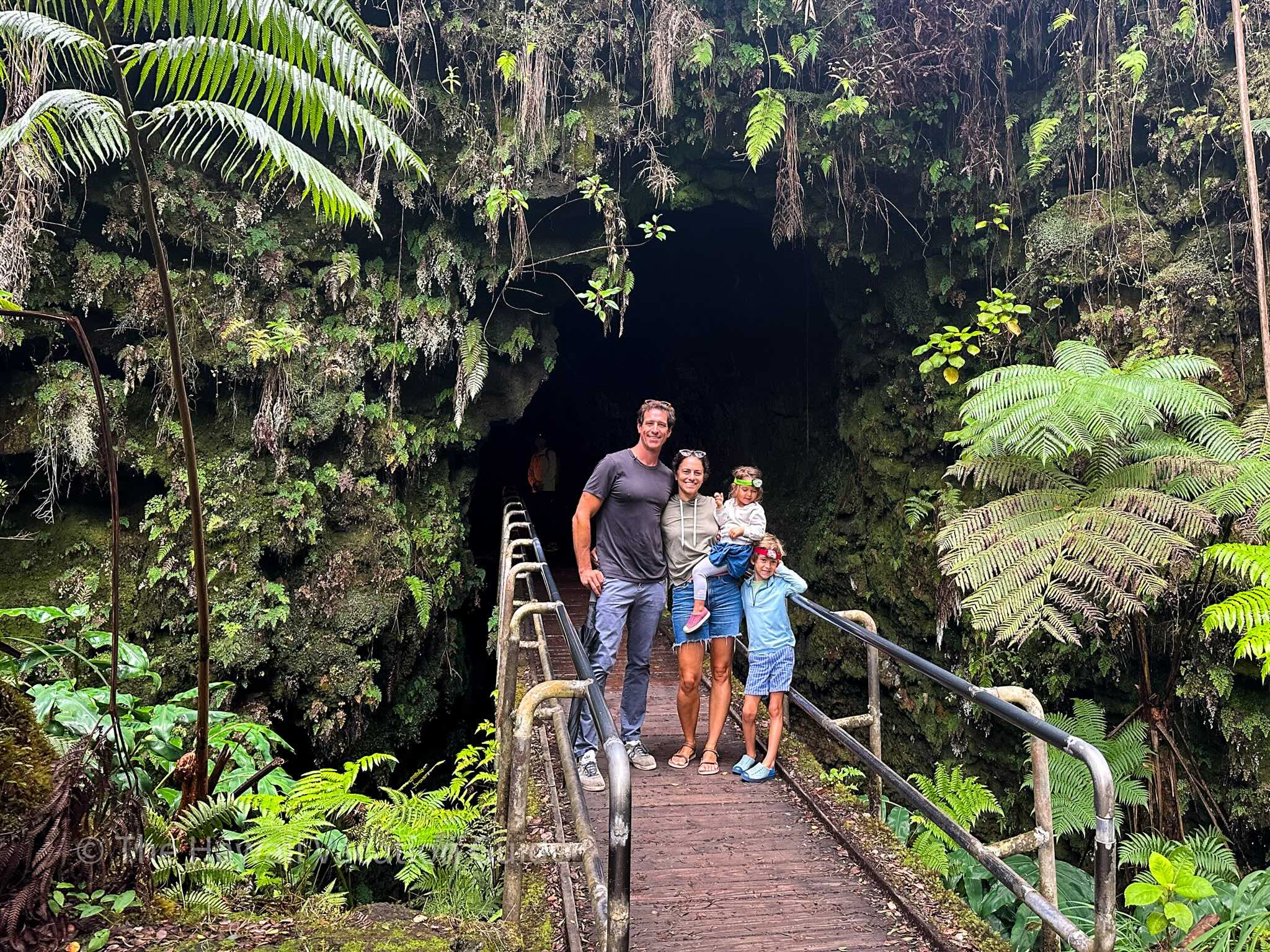
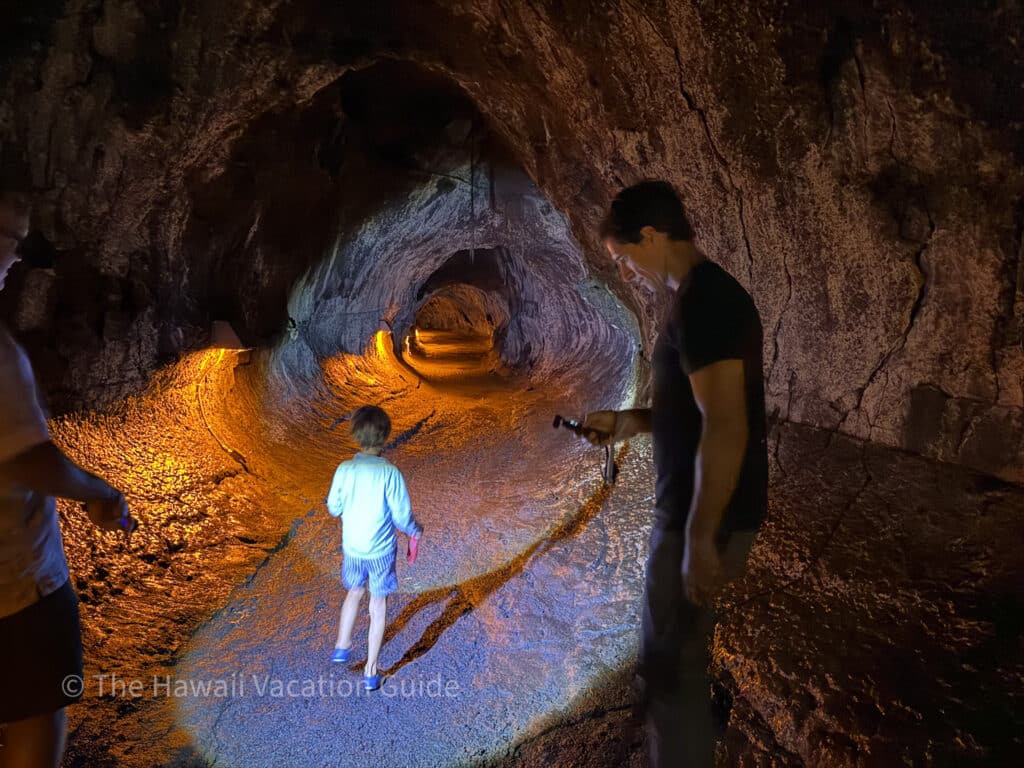
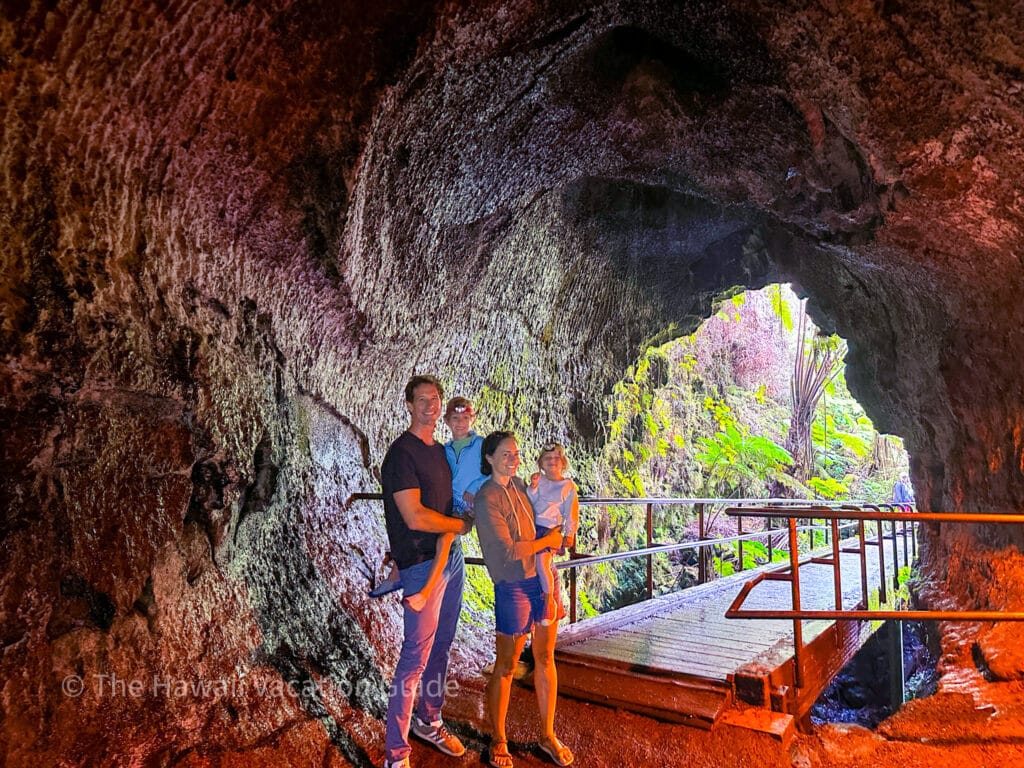
The Thurston Lava Tube is the most popular visitor attraction at the park. And, for good reason. You can walk through a massive lava tube in a fern forest. Giant ferns surround the entrance.
The proper name for the lava tube is the Nahuku Lava Tube. It is 500 years old.
It is more convenient to start with a drive on Crater Rim Road, but I recommend heading here to beat the crowds. Parking can be challenging as the lot is shared with the Kilauea Iki Trailhead.
We have seen Park Rangers issuing tickets to vehicles parked illegally or for exceeding the parking limit. See here for guidance on parking lots at the national park.
To explore the lava tube, follow a short loop trail along a paved path. You will find stairs and uneven surfaces on this journey. There are also restrooms located at this stop.
You don’t need flashlights, as the lava tube is lit, but they will help you see some of the unique features, like giant boulders, soot marks from old torches, and distinctive lava flows inside the tunnel.
If you parked in a spot without a time limit, you can consider hiking the Kilauea Iki Trail. This is a moderate-to-advanced hike as you descend 400 feet into a crater. This is a day hike, see here for details: Kilauea Iki Trail.
Kilauea Iki was a 1959 eruption that lasted for 36 days. Spewing lava fountains made a lava lake that you can now hike over the top of. The lake has liquid lava below its crust, as cooling will take decades.
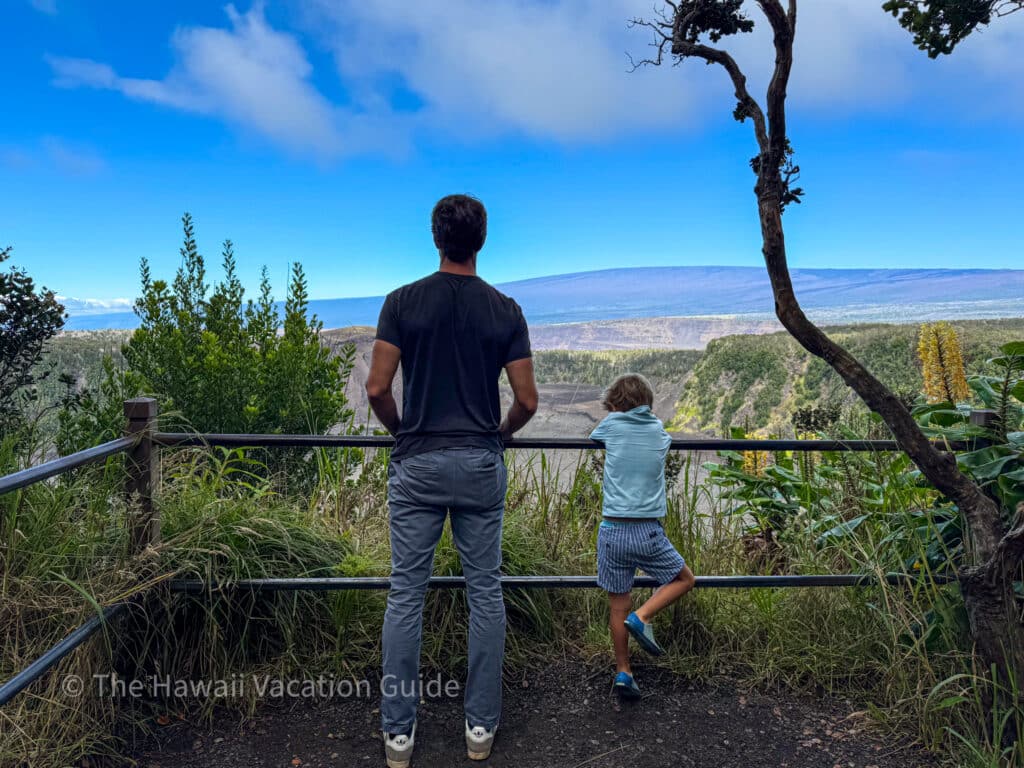
Step 3: Drive Crater Rim Drive East
This is the best way to see numerous sites within a short distance. You will have to backtrack a bit from Thurston Lava Tube, but it is worth it. The north side of the crater is bordered by Crater Rim Drive East.
Along this drive, you will see the following popular stops. I listed them in order from the visitor center to the end of the road (Uekahuna).
- Volcano Art Center Gallery
- Sulphur Banks (Ha’akulamanu) – Walk a paved trail and boardwalk to see where volcanic gases deposited colorful sulfur crystals and other minerals.
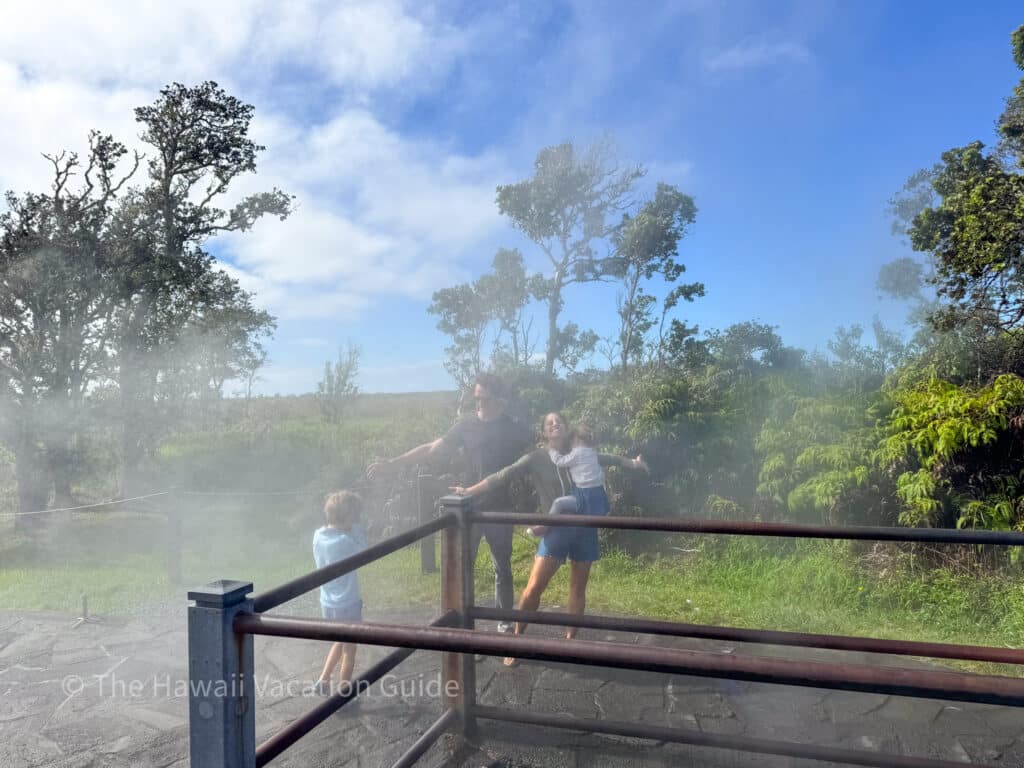
- Steam Vents (Kukamahuakea)
- Steaming Bluffs short walk
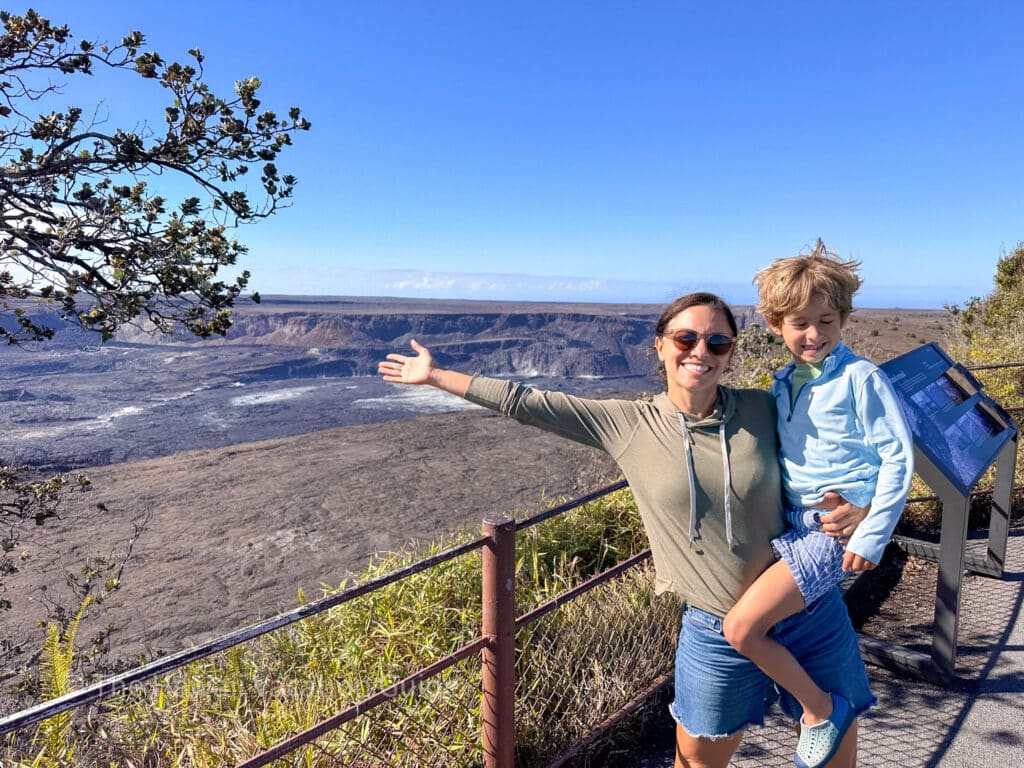
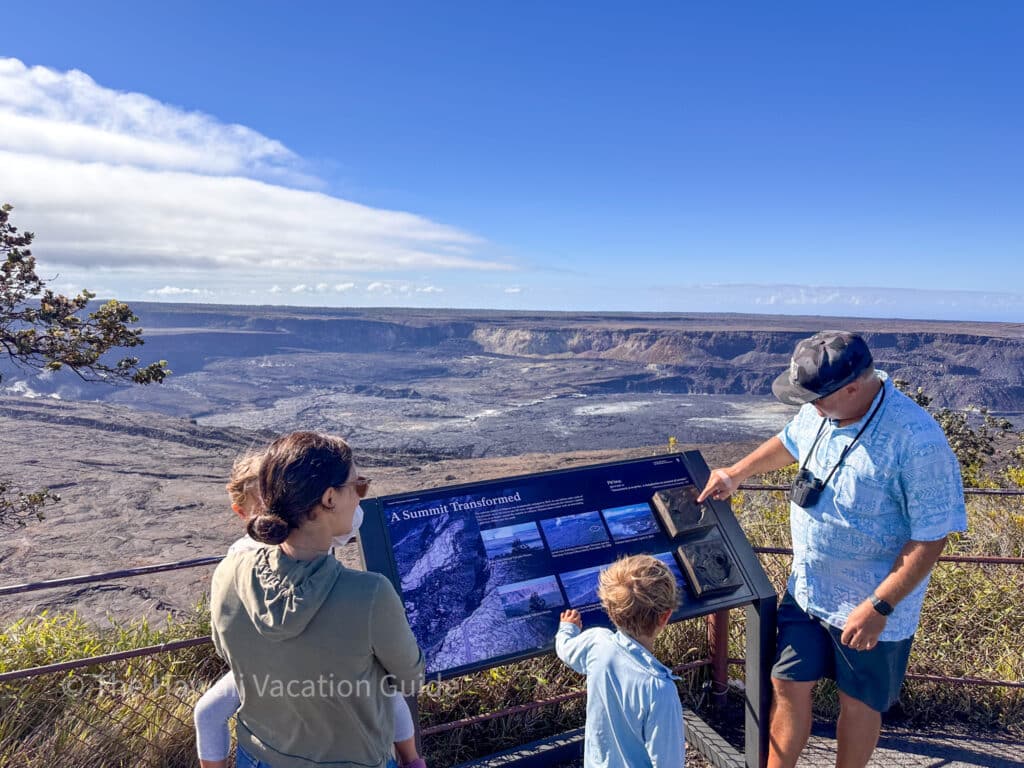
- Kīlauea Overlook provides the most dramatic views of Kīlauea caldera and Halemaʻumaʻu crater.
- Uekahuna – another good overlook to the caldera. This is the highest point on the caldera rim.
Our favorite stops on this journey are the Steam Vents and Kilauea Overlook. The overlook is the simplest and usually the best location to see into the caldera.
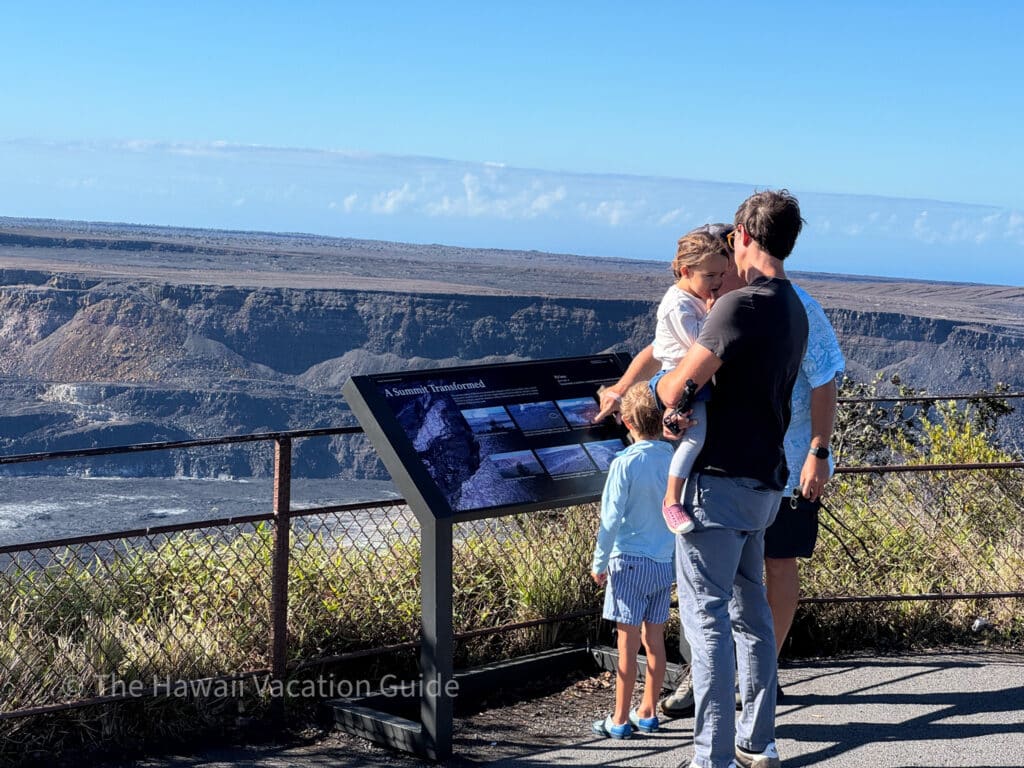
Step 4: Devastation Trail
Make time for a short hike through a lava field! We did this hike with my senior parents and our four-year-old son.
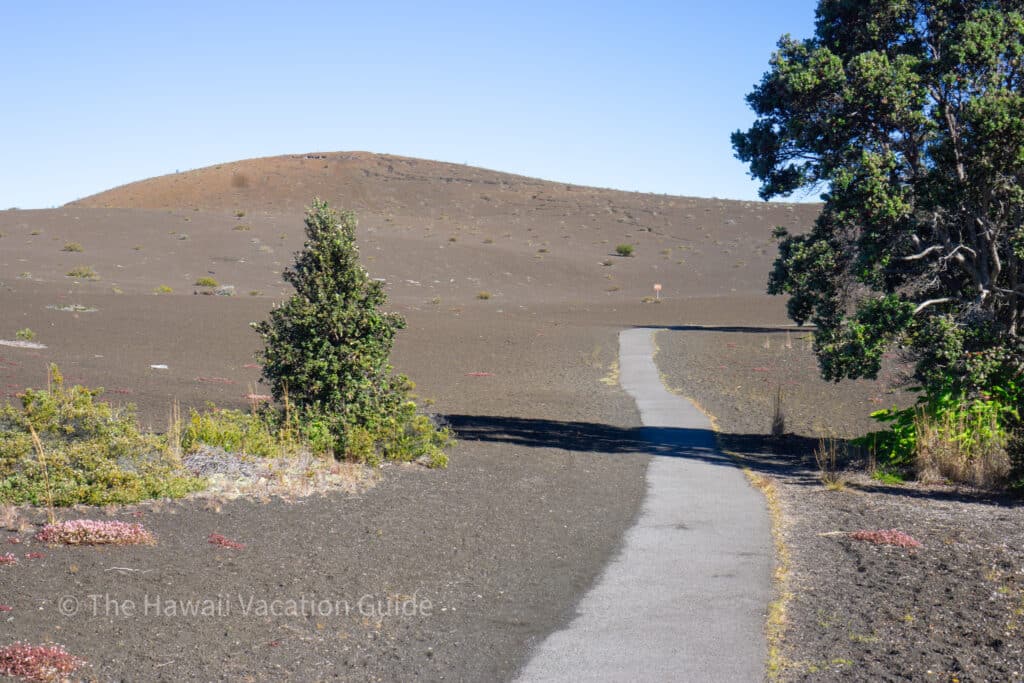
Stroll on a paved path through a starkly beautiful recovering landscape that was buried by falling cinder from the lava fountains of the 1959 Kīlauea Iki eruption.
- Difficulty: Easy – wheelchair- and stroller-accessible. You will find grades of up to 8%.
- Distance and hiking time: 1 mile (1.6 km) round trip, approximately 1 hour.
- Trail begins: Either at the Pu’upua’i parking lot or the Devastation Trail parking lot, both off of Crater Rim Drive.
- Stay on the paved trail.
- Bring: Water, hat, sunscreen, and rain gear. Be prepared for hot, dry, wet, and windy weather conditions.
Step 5: Chain of Craters Road
This is more of a commitment to your day at the park. Crater Rim Road West continues downhill into Chain of Craters Road.
There are numerous stops to make along this famous road. The park’s coastal region was home to several Hawaiian villages: Kamoamoa, Laeʻapuki, Kealakomo, and others.
Numerous trails, home sites, heiau (temple), petroglyphs, and agricultural sites attest to the complex uses of this area over the centuries since the first human settlement.
Chain of Craters Road is 18.8 miles to the end of the road. The road is windy but in good condition (paved).
No food, water, or fuel is available along Chain of Craters Road. Vault-type toilets are available at Maunaulu parking area and at the end of the road.
In my opinion, the most popular stops are the following:
- Craters! Stop at one of the numerous craters along the start of the road.
- Pu’uloa Petroglyphs can be seen after a rugged, windy hike.
- Holei Sea Arch is at the end of the road. Follow the people to the best viewing location along the cliffs.
See here for details on all the stops along Chain of Craters Road.
Chain of Craters Road is best experienced with a local guide, who knows the hidden gems, history, and special spots along this long drive.
One Day in Hawaii Volcanoes National Park (Perfect Itinerary)
Here is an example itinerary on how to visit Hawaii Volcanoes National Park. Use this as a template to start your planning!
We have a video below on an itinerary day to Hawaii Volcanoes National Park from Kona. Click to watch!
Morning
Pack snacks for your day at the park! While you will find a gift shop at Volcano House, I recommend bringing snacks and water as these are hard to find in the park.
Try to arrive at the park by 8 AM to start your day. This is a great way to skip the crowds.
- Visitor Center
- Thurston Lava Tube
- Kilaeua Iki Crater Rim Walk for views of the lava lake (crater)
- Backtrack to drive Crater Rim Road East:
- Sulfur Banks
- Steam vents
- Kīlauea Overlook
Midday
Don’t leave the park for lunch! Volcano is a short drive away for lunch locations, but you can visit Volcano House.
Volcano House is located near the park entrance. We stayed here once and would love to stay again! It is dated, but the historical charm makes it a great place to stay the night or stop during the day.
Inside the hotel, you can eat at The Rim at Volcano House for lunch or dinner. This is fine dining with views of the caldera.
For a well-priced lunch, we recommend eating at Uncle George’s Lounge. They serve classic Hawaii dishes, have beer and wine, and have excellent views of the caldera!
Walk off lunch with a short hike on Devastation Trail.
Explore more of Hawaii Volcanoes National Park day hikes.
Afternoon
Fill your afternoon with a scenic drive along Chain of Craters Road.
Make as many stops as you like, as the afternoon is yours. This is a great way to see the park’s best sites that few people take the time to visit.
Sunset Option
Return to Kilaeua Overlook to enjoy the caldera in the setting sun. If there is lava in the crater, dusk is an excellent time to view it.
The crater is also gorgeous at sunset. The crowds will have left, so enjoy the solitude. Sometimes, a Park Ranger or volunteer is available at the crater rim to answer your questions.
Optional Night Visit and Dinner
Dinner locations are few, and seating is limited. The Rim House is your best option for dinner, as they usually have availability, plus it is convenient.
You can drive into Volcano for more dining options. We share our favorite places to eat in our Big Island Wayfinder Itinerary. From fine dining at the Kilaeua Lodge to Thai to food trucks, you can find some bites.
We have had problems in the past with restaurant availability! Check operating hours before you head to Volcanoe.
Eruption! If you don’t have to go home yet, head back to the crater during a large eruption. There is nothing better than seeing the lava at night!





Best Things to Do in Hawaii Volcanoes National Park
Here is how to visit Hawaii Volcanoes National Park in a nutshell! Here are the best things to do at the park.
- Walk through a lava tube
- See an active volcano
- Drive through lava fields on Chain of Craters Road
- Explore The Kuhuku Unit, a less-visited park within the park with short hikes and coastal views.
- Go on a backcountry hike to fully experience the park! Learn more here.
- Download the NPS App to help navigate your way around the park.
Things to Do Near Hawaii Volcanoes National Park
We have you covered with activities near the national park. Check out our articles below to keep you busy in South and East Hawaii.
- Explore the South Point of the Big Island for more things to do.
- 32 of the Best Things to Do in Hilo
- Private Waterfall Swim Near Hilo
- Big Island Waterfalls Guided Tour
- 29 Incredible Things to Do on the Big Island
Hawaii Volcanoes National Park Tours
Most of the time we visit the park, we do a self-guided tour. We share how to do a self-guided tour from Kailua-Kona in our Big Island Wayfinder Itinerary. Let us finish your planning for you!
But we also greatly appreciated a tour by a local guide. We went out with Joel, an amateur volcanologist, for the day. He showed us places we didn’t know existed, shared historical nuggets, had us hold Pele’s Hair, and made for a memorable experience. Learn more about Joel and Scott’s private volcanoes tours here.
A guided tour is also a great option for cruise ship passengers. Let the guides pick you up at the cruise port in Hilo to show you the park. Joel will pick you up on a private tour, or go on a Big Island Volcano Tour with Chocolate Tastings and Waterfalls.
Stargazing is another popular tour at Hawaii Volcanoes National Park. The Twilight Volcano and Stargazing Tour is very popular with our readers.
See our details on Stargazing in Hawaii, especially the section on stargazing on the Big Island.
Explore all of our Favorite Big Island Tours! Erica and I have been on dozens of tours across the Big Island to find the best ones. From Manta Ray Night Snorkeling to Private Waterfall Swims, you won’t be disappointed with our tour recommendations.
Is Hawaii Volcanoes National Park Worth It?
If you love geology, volcanoes, unique landscapes, rare fauna, and otherworldly places, then Hawaii Volcanoes National Park is for you.
The main reason we like to visit the Big Island is for the adventure it offers. While we love a Kona beach, Hawaii Volcanoes National Park provides a different experience in Hawaii.
You can walk along an active volcano and get amazing views of Moana Loa. The Island of Hawaii has the best volcanoes. You can also go up Mauna Kea, but visiting the park is far easier.
Visiting this park is a can’t-miss activity on the Big Island.
Erica shares all her favorite Big Island can’t-miss activities in this article: Last-Minute Trip Planning to the Big Island.
Volcano Safety & Important Tips
Here are tips to keep you and your family safe when visiting Hawaii Volcanoes National Park.
- Never enter closed or restricted areas—established eruption viewing overlooks are in place for your safety. Entering closed areas can cause serious injury or death.
- Stay on marked trails and overlooks.
- Hazardous volcanic gases pose a risk, especially to those with heart or respiratory issues, infants, children, and pregnant women; check the air quality alert before visiting. Vog is a real thing!
- Both Pele’s Hair and volcanic ash are abrasive and can irritate eyes, skin, and the respiratory system. The best protection is to limit exposure.
- Wear appropriate clothing and sturdy footwear. If you are visiting at night, bring warm clothes and rain gear; check the weather before visiting.
- Keep a safe distance from earth cracks, cliff edges, vents, fumaroles, and lava flows.
- Follow ranger guidelines and evacuation routes during unsafe volcanic activity.
Where to Stay Near Hawaii Volcanoes National Park
- Volcano House is the classic place to stay in the park! The old hotel is located directly on the caldera rim, making for amazing views. Don’t expect a luxurious stay, but expect a charming one.
- Volcano Village has Kilauea Lodge and a few bed-and-breakfasts.
- Hilo is 45 minutes away and is full of hotels and vacation rentals. The nicest hotel in Hilo is the Hilton Doubletree’s Grand Naniloa on Hilo Bay.
- Kona is about 2 hours away. You will find the most options in Kona.
- Camp at Volcanoes National Park! Big Island Camping: 27 Campsites and How to Book Them
- Hilo or Kona: Where to Stay
- Kona vs Waikoloa Resorts
- Unique Places to Stay in Hawaii – we stayed in a yurt in Fern Forest on one visit to Hawaii Volcanoes National Park. This was unique and convenient!
Explore all of our Favorite Big Island Hotels and Vacation Rentals! Erica and I have made an honest effort to stay at or walk every hotel and vacation rental on the Big Island. We are still working on it, but we have been to about 80% of them! See our reviews of our favorite places below.
Final Thoughts
How to visit Hawaii Volcanoes National Park starts with booking your trip to the Big Island! You won’t regret staying near the park or visiting from Kona.
As you’re over on this side of the island, consider pairing your visit with a stop in Hilo or South Point for the day.
I can’t stress enough that visiting the park with a local guide is a great way to visit as a first-timer. Consider booking one of the tours below; let them handle the driving and the itinerary.
- Big Island Volcanoes Tour with Chocolate Tastings and Waterfalls
- Private Tour of Volcanoes with local guides
- Twilight Volcano and Stargazing Tour