Stargazing in Hawaii: Where to See the Best Night Skies (Big Island, Maui, & More)

A quick note: we’ve included a few affiliate links below. Booking through them costs you nothing extra and sends a small commission our way, which helps us keep writing free Hawaii guides. We only ever link to things we’d recommend to a friend. Mahalo! Read about our affiliate policies here.
If you’ve never seen the Milky Way with your own eyes, Hawaii might ruin every other night sky for you.
Stargazing in Hawaii is unlike anywhere else in the United States. In the middle of the Pacific Ocean — thousands of miles from major cities — Hawaii’s isolation creates some of the darkest skies on Earth. Add in volcanic peaks that rise above the clouds, and you get front-row seats to the universe.
On the Big Island, the summit of Mauna Kea is considered one of the best astronomical sites in the world. On Maui, Haleakalā offers breathtaking sunset views followed by crystal-clear stargazing at 10,000 feet. And even at sea level, Hawaii’s remote beaches deliver star-filled skies most mainland travelers have never experienced.
But not all stargazing experiences are the same.
Should you book a guided summit tour? Is volcano stargazing really better than watching from the beach? And which island offers the best overall experience?
Let’s look up.
Our Stargazing in Hawaii Shortlist of Resources and Tours
Why Stargazing in Hawaii Is So Special
When we lived on Oahu and Maui, we were always awe-struck by the number of stars and planets. Locals are more keenly aware of the location of the planets, which planets you can see, and most folks have starfinder apps. Stargazing in Hawaii is a part of daily life.
On Maui, we lived in a community in Lahaina along the ocean. The community had street lights, which we didn’t realize caused more light pollution than we understood.
A friend invited us to a BBQ and a cacao harvest at Ku’ia Chocolate Estates. The location was on the side of the West Maui Mountains, above the lights of Lahaina.
This was the first time the Hawaiian sky made my mouth agape. The Milky Way was lighting up our campsite. Without the aid of a telescope, Erica and I were mesmerized by the trail of stars.
We have since gone on stargazing tours on all the Hawaiian islands. Let us share our stargazing in Hawaii experiences with you, so you don’t miss this opportunity.
Here are a few of the reasons why Erica and I enjoy stargazing in Hawaii.

Aloha! I’m Jordan,
Co-founder of The Hawai’i Vacation Guide with my wife Erica. After living on both Maui and Oʻahu, we’ve turned our passion for the islands into a resource that cuts through the tourist noise. We share genuine experiences—from snorkeling spots to hikes—and connect travelers with authentic Hawaiian culture and ʻāina (land). Our mission is simple: make your Hawaiian adventure both seamless and meaningful.
Thanks for joining us on the journey—aloha and happy travels!
1. Geographic Isolation in the Pacific
Dark sky locations can be hard to find on the US mainland. Especially for our East Coast friends.
Hawaii is located thousands of miles from major sources of light pollution.
Honolulu, located on Oahu, is the largest source of light pollution. But that is a non-issue on the neighbor islands. Even on Oahu, it is easy to get away from the light by visiting a secluded beach or going up one of the two mountain ranges.
The clear ocean air also helps! The daily trade winds blow away the small amount of pollution. Hazy skies are rare, and lots of sunny days mean little evening cloud cover.
2. High Elevation Volcanoes
Hawaii is made from volcanoes. The four major islands have volcanoes that tower above the landscape.
These mountains, Mauna Kea and Haleakala, being the highest for stargazing in Hawaii, are above much of Earth’s atmosphere. You will find drier air at summit elevations.
While you don’t have to visit the summit of a volcano for stargazing in Hawaii, it makes for a special experience.
3. Minimal Light Pollution Areas
Hawaii takes stargazing seriously thanks to the active amateur astronomy groups and environmentalists on the islands.
The Big Island, especially, is famous for its dark sky zones. As the Big Island comprises 63% of the archipelago’s land mass, there are many uninhabited areas suitable for dark-sky zones.
You will also find dark-sky zones in and near national parks, such as Hawaii Volcanoes National Park and Haleakala National Park.
Learn more with our free island guides:
Stargazing on the Big Island (Home to Mauna Kea)
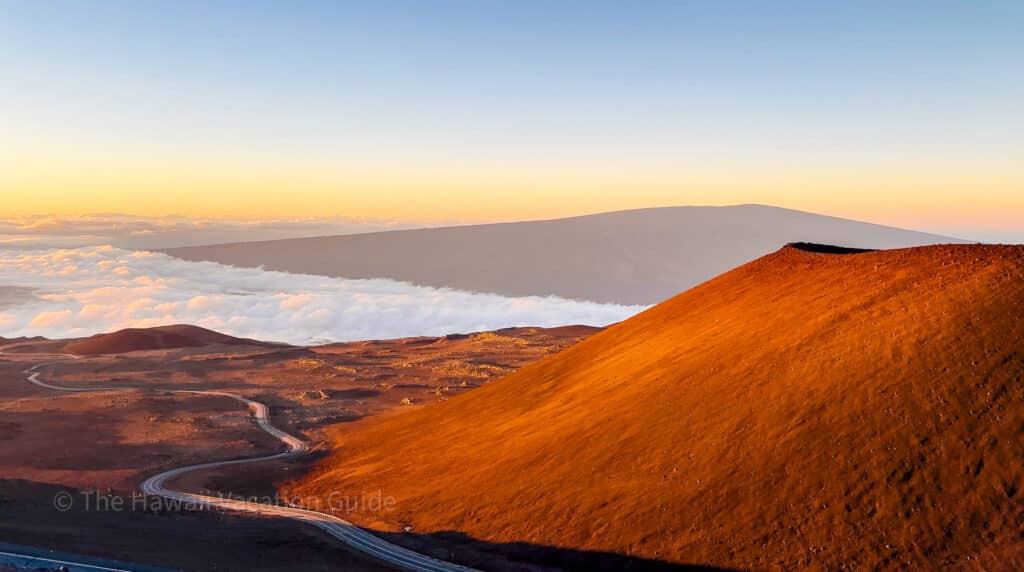
Mauna Kea: The Best Stargazing in Hawaii
Mauna Kea isn’t just a good place to see stars.
It’s widely considered one of the best stargazing locations on Earth — and that reputation isn’t hype. It’s science.
Here’s why:
Mauna Kea is famous for stargazing because it checks every box astronomers look for:
- High
- Dark
- Dry
- Stable
- Equatorial
It’s not just beautiful. It’s scientifically elite.
If you’re planning a Big Island trip and want the best night sky experience Hawaii offers, Mauna Kea is hard to beat.
Mauna Kea Facts:
- Mauna Kea rises 13,803 feet above sea level.
- Translates to “white mountain” in Hawaiian
- Mauna Kea hosts some of the most advanced telescopes on the planet, including:
- W. M. Keck Observatory
- Subaru Telescope
- Gemini Observatory
- Visitors cannot visit the observatories. Gemini has a visitor program, but it is challenging to get a tour once a month.
- What you can see: Milky Way, planets, constellations, sometimes distant galaxies
Is It Worth Going to the Summit?
For many visitors, yes — but it’s not for everyone.
Things to consider:
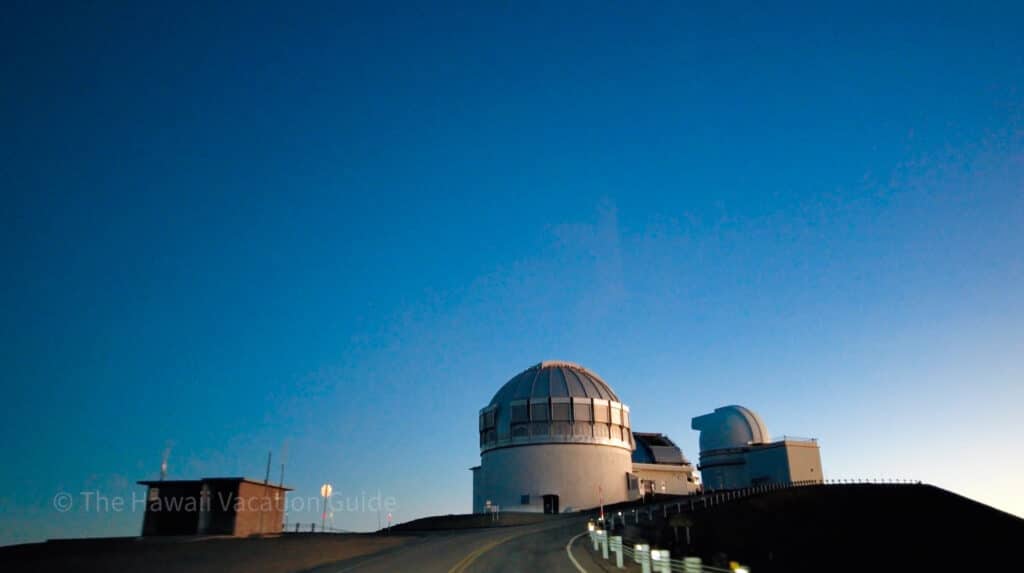
- Stargazing at the summit is not allowed! The scientists don’t want interference with the telescopes. So, tours may start at the top for sunset, but they have to move below the summit for stargazing. They are at around 9,000 ft, but not at the summit.
- The summit requires a 4WD vehicle. This isn’t a hard law, but the Park Rangers who man the gate will interview you about your mountain driving skills. If there is snow on the summit, they will require 4WD. The issue isn’t going up, it is coming down. Overheating the brakes is a real issue. I have driven to the top in a sedan, but that was over a decade ago. Now, I go up in a Jeep.
- Altitude can cause headaches or nausea.
- It’s cold (often near freezing).
- Not recommended for young children or certain health conditions.
See our full guide to Stargazing on Mauna Kea for details on getting to the top.
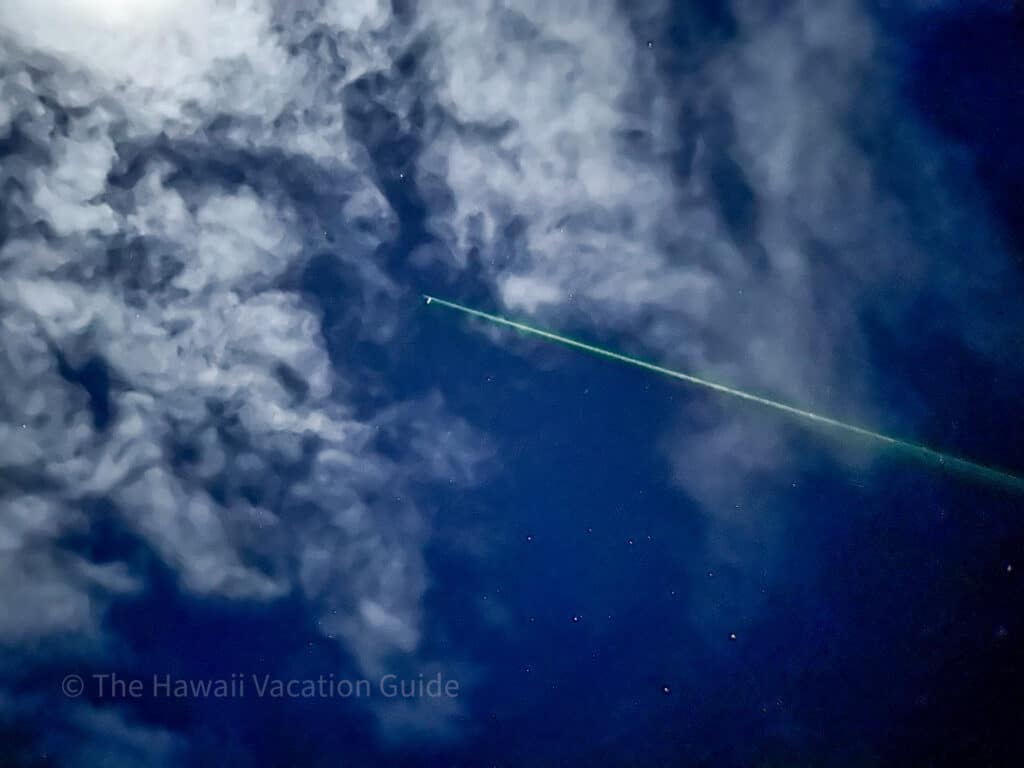
Many visitors choose to stargaze from the Visitor Information Station instead, which is lower and still excellent. The Mauna Kea Visitor Information Station hosts stargazing events most evenings. They will bring out telescopes and/or use a laser pointer to tour the night sky.
Mauna Kea is culturally significant in Hawaii. A few years ago, Hawaiians protested further development of the summit for a large telescope (The Thirty Meter Telescope). A committee, including native Hawaiians, was formed to oversee the summit with the University of Hawaii.
When you visit the summit, leave no trace and be a respectful visitor.
What You’ll See Through Professional Telescopes
- Saturn’s rings
- Jupiter’s moons
- Deep-sky objects
Recommended Big Island Stargazing Tours
We have a few Big Island stargazing tours to choose from. Two are located on Mauna Kea.
1. Mauna Kea Stargazing with Photos
Set out for the stars with an analog astronaut and professional astro-photographer, James. Have the stargazing experience of a lifetime, plus get your photo taken with the incredible night sky as your backdrop for free as a keepsake.
- 2-hour duration
- Departure time varies but is typically around 7:00 pm or 10:00 pm; see the calendar for exact times
- Does not run during a full moon or poor visibility, with a 100% refund if your tour is canceled
- Maximum of 14 guests with private tours available!
- Stargaze with an expert pointing out incredible deep-space objects like galaxies and nebulae
2. Mauna Kea Summit & Stars
You will journey from sea level to the nearly 14,000-foot summit of Maunakea to reveal the wonders and world-class clarity of the Hawaiian night sky. Depart in the afternoon for a 7 to 8-hour experience to the top of the world (it feels like it) for world-class stargazing with an interpretative guide.
- Duration: 7 to 8-hours roundtrip journey
- Rated: easy to moderate, ages 16+
- Max group size is 12
- Enjoy a warm picnic dinner at a private location and learn about Hawaiian star navigation
3. Twilight Volcano and Stargazing Tour
More than stargazing in Hawaii.
See the best of the Big Island with a full-day tour starting at a Kona Coffee Farm and ending with breathtaking views of stars and planets from Mauna Kea.
- Start time between 9:30 and 11:00 am, depending on pickup location
- 12-hour tour duration
- This small group tour takes 4 to 13 guests
- Tour a Kona Coffee Farm, learning about the harvesting and milling process, all while sampling Kona Coffee
- Visit Punalu’u Black Sand Beach, Volcanoes National Park (including Thurston Lava Tube)
- Observe stars, planets, and galaxies under the pristine night sky near Mauna Kea, weather permitting.
The Best Tours in Hawaii! Erica and I have gone on dozens of tours to find our favorites. Browse can’t-miss experiences with local guides below.
Thanks for booking through our website; we provide direct booking links at the best prices.
Stargazing on Maui
Maui is another popular place for stargazing in Hawaii!
The famous location is stargazing on Haleakala, but you don’t have to head to the summit for an excellent view.
Jump to our Stargazing on Maui Guide for more details.
Haleakalā: Stargazing Above the Clouds
Haleakalā is famous for stargazing for many of the same reasons as Mauna Kea — but with a very different visitor experience.
It’s not just “high and dark.”
It’s one of the most accessible high-elevation stargazing locations in the world.
Haleakalā is famous for stargazing because it combines:
- High elevation
- Clear, dry air
- Dark skies
- Easy access
- Stunning volcanic scenery
It’s one of the few places in the world where you can drive above the clouds, watch the sun set over a volcanic crater, and then see the Milky Way emerge — all in the same evening.
For Maui visitors, it’s often the best night sky experience on the island.




Important Things to Know
Stargazing at Haleakalā isn’t casual.
- It’s cold (often in the 30s–40s°F at night).
- Winds can be strong.
- Altitude affects some people.
Also note: Sunrise reservations are required, but sunset does not require the same timed-entry permit (though park entry fees apply).
Haleakala Resources:
- Complete Guide to Visiting Haleakala National Park
- 4 Best Haleakala Sunrise Tours
- Haleakala Sunrise or Sunset?
Why Many People Prefer Haleakalā for Stargazing
For visitors to Maui:
- It’s easier to access.
- It doesn’t require specialized vehicles.
- It’s a more controlled, predictable experience.
- You can combine it with a sunset visit.
- In fact, many travelers find the sequence sunset → twilight → stars to be the most rewarding.
- The crater glows red at sunset, fades into deep blue twilight, and then the stars begin to appear one by one.
- It’s dramatic.
Best Maui Stargazing Tours
Welcome to the best stargazing tours on Maui! Pick the right stargazing tour for you and your group.
We share the highlights of each tour, our review, and reader reviews. You can click the booking buttons for more information on the tour.
Maui Stargazing
Don’t let the price scare you away. While it is more expensive than our last two Maui stargazing tours, this tour is a full experience. The tour company is famous on Maui for offering such an extended stargazing tour, with great reviews.
The tour meets at Kula Lodge and Marketplace. Arrive early to order food for dinner. From there, you board their van to take you to Haleakala National Park.
You will arrive for the famous Haleakala sunset.
Once the sun has set, the largest portable telescope on Haleakala will be out for a 60-minute guided tour of Maui’s night sky.
The Maui Stargazing tour includes winter jackets and snowpants to keep you warm!
- Location: Meet at Kula Lodge and Marketplace (click for directions)
- Elevation: High Altitude
- Duration: 6 – 7 Hours
- Tours: Daily at 3:15 PM
- Ages: All ages are welcome
- Why We Like This Maui Stargazing Tour: This is a whole stargazing experience on Maui! The tour of Haleakala, sunset, and a 60-minute stargazing tour from close to 10,000 feet is a full evening out. If you’re a passionate stargazer, this is the tour for you.
- Considerations: The price point and the tour length may not be for everyone. Be prepared for cold weather, a good amount of driving, and for the weather to change quickly. Book this tour early in your trip in case conditions are poor.
More Haleakala Guide Tours for Stargazing, Sunset, and Sunrise:
- Maui Volcanoes Tour with Haleakala & Iao Valley (sunset)
- Maui Volcano Quest Private Tour
- Pride of America Passengers: Haleakala & Iao Valley Tour
- Haleakala Sunset Maui Tour: Summit, Sunset, & Stroll
Stargazers Anonymous
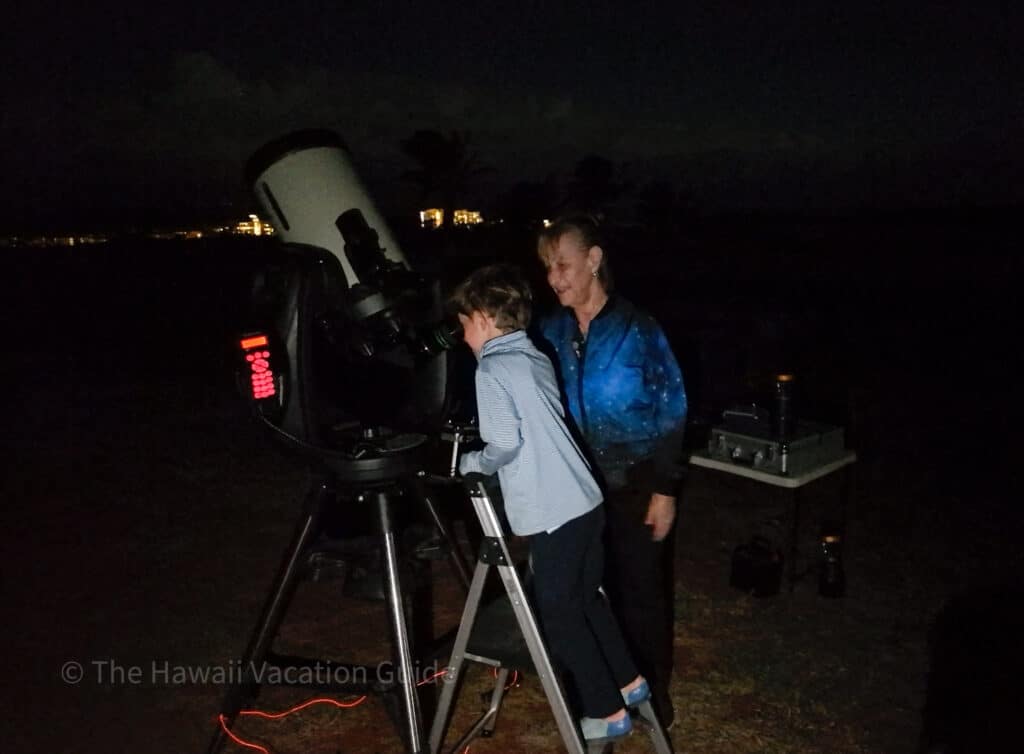
Let Donna Meistrich, a passionate astronomer, take you up the West Maui Mountains for this fascinating stargazing tour in Ka’anapali, Maui.
Our family enjoyed the fantastic tales of supernovas, the birthplace of gold and platinum, and the stargazing! She moved from one constellation to the next.
This tour is handicap accessible. When you book the tour or afterwards, let Donna know if you need assistance with access. (We also have a Hawaii handicap accessibility guide to help you with the rest of your vacation planning.)
- Location: West Maui, specifically between Olowalu and Kapalu
- Elevation: Low Altitude
- Duration: 1.5 Hours
- Tours: Thurs – Sun at 8 PM
- Ages: All ages are welcome!
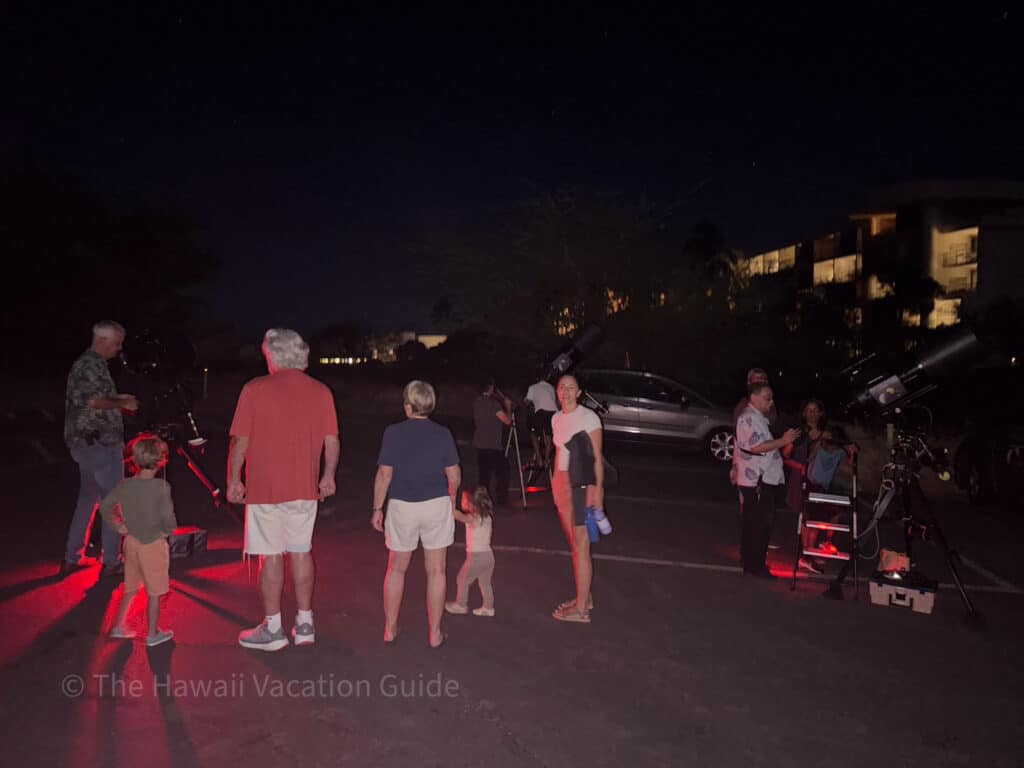
- Why We Like This Maui Stargazing Tour: The location near our hotel in Kaanapali made it quick to drive to her telescopes, and the price point and duration were perfect for our family with a three-year-old and a seven-year-old. The kids loved stargazing as much as Erica and I did. Her stories and energy made for a memorable experience.
We also liked how this tour was on the slopes of the West Maui Mountains. It made for a dark sky, even though it was close to Ka’anapali. The hard ground and chairs she provided made for a comfortable stargazing event.
We share more details on the tour in our complete review here: Stargazing Tour in Ka’anapali. Or you can book directly with Donna using the buttons below.
Stargaze West Maui
Here is another stargazing tour in West Maui! Head up to Kapalua to stargaze on Ironwoods Beach.
The secluded beach between The Montage and the Ritz-Carlton Kapalua is great for dark skies. Enjoy the surf and the stories as Stargaze West Maui shows you constellations, planets, and deep-sky objects like the Andromeda Galaxy and the Orion Nebula.
- Location: Ironwoods Beach, Kapalua (West Maui) Click for directions to Ironwoods Beach
- Elevation: Sea Level
- Duration: 1.5 Hours
- Tours: Daily at 8 PM
- Ages: 6 and older are welcome
- Why We Like This Maui Stargazing Tour: The price can’t be beat! A good price for the experience. A pro and a con of stargazing on the beach! The beach location is dark and adds a lovely experience to view the stars with the surf. The location in Kapalua is convenient for those staying in Napili and Kapalua.
- Considerations: Stargazing is on the beach, so you may get sandy. Due to the stairs down the beach and the sand, this tour is not recommended for those with mobility challenges. They have one location on northwest Maui, so there is a higher chance of rain and cloudy skies.
Stargazing on Oahu
Oʻahu doesn’t have 10,000-foot volcano summits like Maui or the Big Island — but you can still have an excellent stargazing experience if you go to the right places and manage expectations.
Here’s how to do it right.
Tips for Stargazing on Oahu
Get away from Honolulu (this is everything).
Light pollution from Honolulu and Waikīkī washes out much of the night sky.
If you want decent stargazing:
- Head to the North Shore
- Go to the west side
- Or choose the windward beaches away from town
The darker the horizon, the better the Milky Way and faint stars will appear.
Oahu travel resources:
- Polynesian Cultural Center vs Toa Luau: two of our favorites!
- 7 Must-Do Things on Oahu
- Oahu Farm Tour: Cacao and Honey Tour
Best Areas for Stargazing
Here are solid spots with darker skies for stargazing in Hawaii:
Kaena Point (West Side)
- One of the darkest accessible areas on Oʻahu
- Remote and minimal development
- Incredible sunset-to-stars transition
- Bring a flashlight (very dark)
If you head out to the West Side, check out this tour to swim with dolphins and go snorkeling!
Sunset Beach (North Shore)
- Wide open horizon
- Easy parking
- Good for casual stargazing
- Best on moonless nights
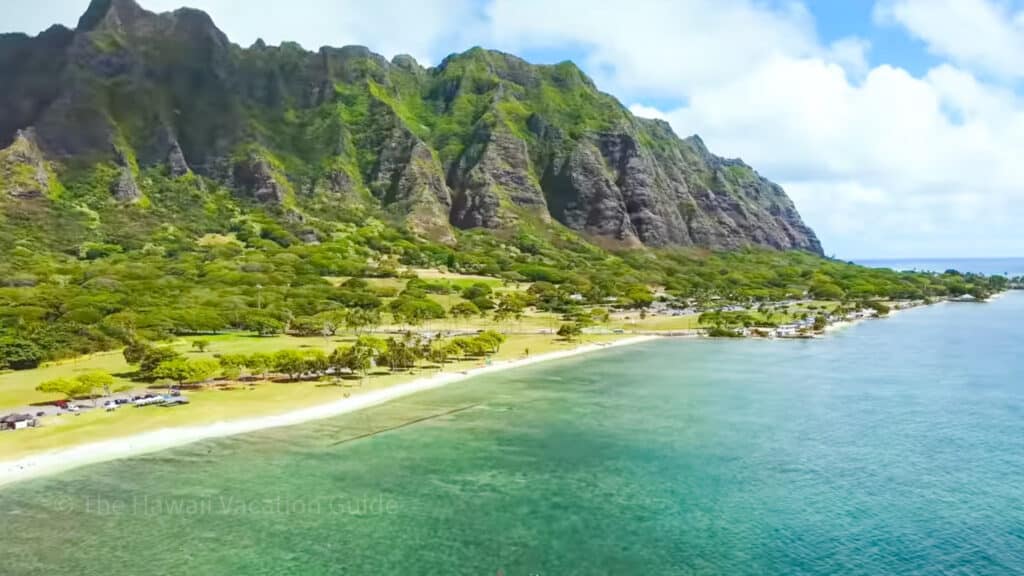
Kualoa Regional Park (Windward Side)
- Mountain silhouette foreground
- Good compromise between access and darkness
- Great for astrophotography compositions
None of these will match high-elevation stargazing on other islands — but they’re the best Oʻahu offers.
Stargazing on Oahu Tour
The only Oahu stargazing tour we have is super-convenient. It is located in Ko Olina Resorts, perfect if you’re staying here!
Stars Above Hawaii
Get more than just stargazing under the beautiful Hawaiian night sky. View galaxies, stars, planets, and constellations through an incredible telescope, allowing you to see the stars above Hawaii in a way you didn’t realize was possible!
- 1 hour duration
- Start time varies seasonally, depending on when the sun sets
- View the stars, planets, and constellations through a powerful telescope with an expert pointing out everything you’re seeing
- Best suited for ages 5 and up
Stargazing on Kauai
Kauaʻi is one of the best islands in Hawaii for casual stargazing, with fewer resorts, less development, and naturally darker skies than Oʻahu or Maui.
Tips for Stargazing on Kauai
The further west you go, the darker it gets.
The town of Līhuʻe has some light pollution, but the west side is far more rural and ideal for night skies.
Polihale State Park
- Probably the darkest accessible beach on the island
- Massive open horizon
- Incredible Milky Way visibility on moonless nights
- Very remote! 4WD is recommended as the drive to the state park is on a dirt road and notorious for accidents and breakdowns.
If you want the darkest sky experience on Kauaʻi, this is it.
Waimea Canyon State Park at Dusk
While it’s more famous for daytime views, the transition from sunset to twilight here can be beautiful.
Pros:
- Higher elevation than the coast
- Dramatic canyon silhouettes
- Fewer crowds after sunset
Important:
Park hours and safety matter; always check current access rules before staying late.
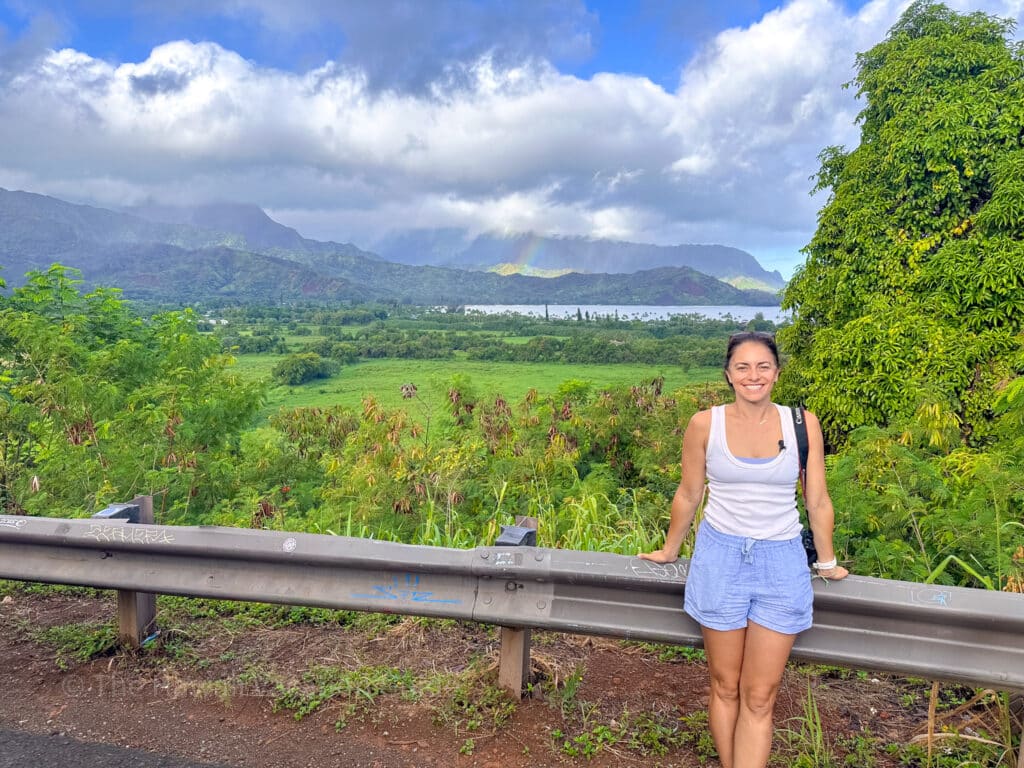
North Shore = Scenic + Decent Darkness
The North Shore isn’t as dark as Polihale, but it’s still good.
Hanalei Bay
- Mountain backdrop
- Wide open sky
- Great for astrophotography foregrounds
You’ll still get strong star visibility on a moonless night.
Kauai travel resources:
Volcano Stargazing vs. Sea-Level Stargazing in Hawaii
Yes, you can see stars from the beach.
But at sea level:
- More humidity
- More atmospheric distortion
- More light pollution
- More haze
At 10,000 feet on Haleakalā, the difference is noticeable.
The sky looks deeper. The Milky Way has texture. Planets shine steadily instead of flickering.
Stargazing on a Volcano (High Elevation)
Pros:
- Above clouds
- Less atmosphere = clearer stars
- Incredible panoramic views
- A unique, memorable Hawaii experience!
Cons:
- Limited access/permits
- Cold temperatures
- Altitude sickness concerns
- Astronomers on the Big Island told us that your eyes have less oxygen at higher elevations, which decreases your sight.
Stargazing at Sea Level
Best Sea-Level Spots
- Big Island beaches (Kohala Coast)
- South and West Maui and Hana Town
- Kauai’s West Side and North Shore
- Oahu’s West Side
- Remote areas away from resorts
Pros:
- Easier access
- Warmer
- No altitude concerns
Cons:
- Slightly more atmosphere = less clarity
- Light pollution near resort areas
Best Time of Year for Stargazing in Hawaii
The summer months (April – October) are the best for stargazing in Hawaii. As it is the dry season, you should expect less cloud cover and clear skies. You will also have slightly warmer nights on the side of the mountain.
Stargazing tours in Hawaii are available year-round. The tour operators watch the weather religiously for your tour. They may change the location or the date, so book your tour early in your trip so you can be flexible!
Don’t Worry About the Moon
A full moon is not a problem! We went stargazing during a full moon, and it was incredible. We took phenomenal pictures of the moon, like the picture below.
I was always told not to go stargazing during a full moon. It made sense, the night sky is bright! But Donna and other astronomers have told me they can still see planets, nebulae, and constellations in the sky on a full moon in Hawaii. They aren’t just selling tours, as we had a wonderful time out on our Maui stargazing tour.
Some tours, like those on Mauna Kea, do not operate on a full moon. They are going for a darker sky experience.
If you’re visiting during a new moon, then book a stargazing tour in Hawaii! You will get an amazing experience. But don’t change your dates based on the lunar cycle.
What to Bring for Stargazing in Hawaii
Even on a warm day, nights can feel cooler and breezy.
Bring for stargazing in Hawaii:
- Light jacket
- Blanket or beach towel
- Flashlight (preferably red light)
- Closed-toe shoes
- Camera settings for astrophotography
- Water + snacks
Comfort helps you stay longer, and the longer you stay, the more the sky reveals.
Is Stargazing in Hawaii Worth It?
You will love stargazing in Hawaii if you appreciate the night sky, want a bit of an adventure, and enjoy an informative tour.
We have had our best stargazing experiences on guided tours. The astronomers not only have the best equipment but also the best stories. From NASA to Greek mythologies in the constellations, they will awe you as much as the constellations you are seeing.
Families, couples, and photographers should visit Hawaii for stargazing. You will not regret it.